The DynoRoute blog
Guide·August 4, 2026
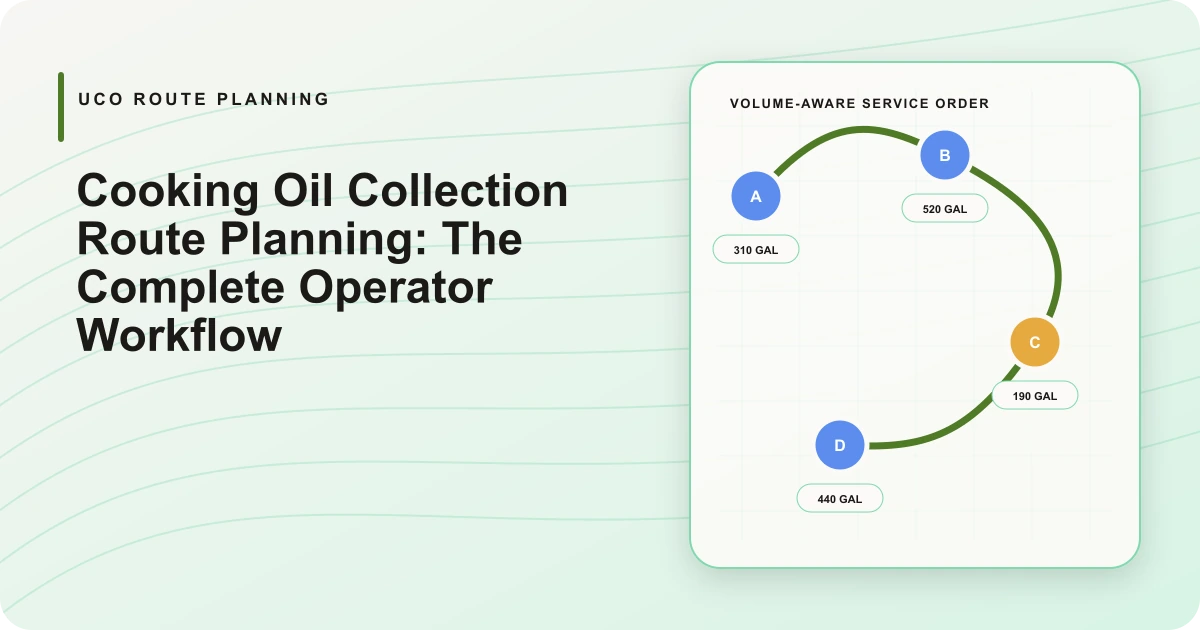
Cooking Oil Collection Route Planning: The Complete Operator Workflow
UCO routes fail when they're planned like delivery routes. Here is the full workflow: pick the containers that are actually ready, keep the truck under its fill limit with the depot return planned in, and rank routes by what they earn per truck-hour.
Guide·August 3, 2026
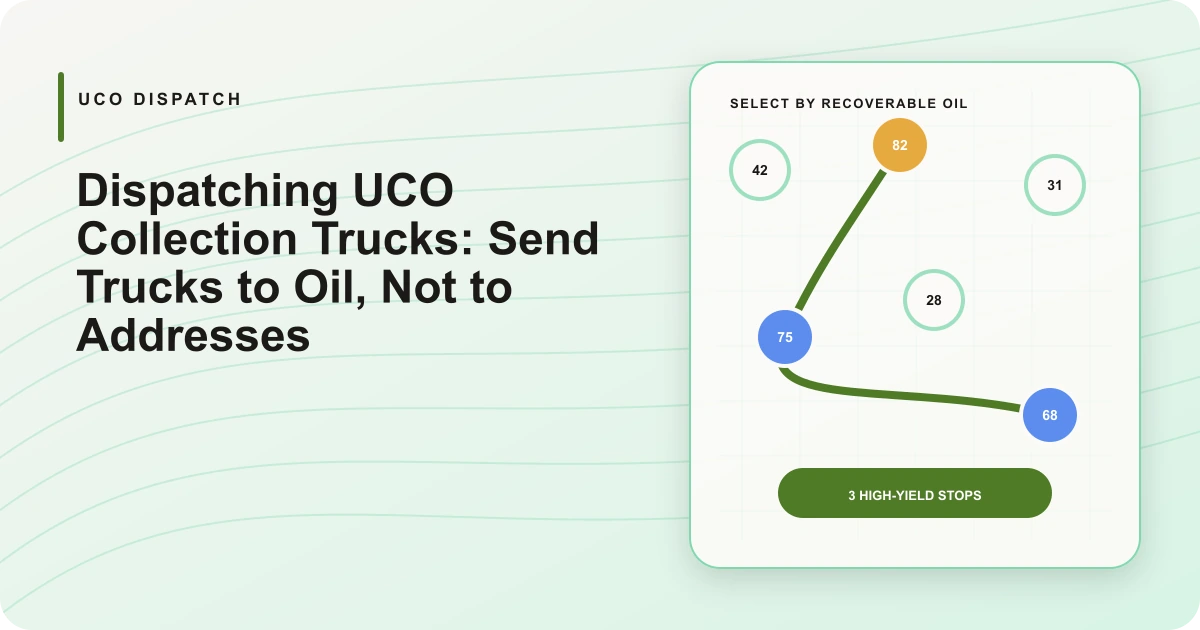
Dispatching UCO Collection Trucks: Send Trucks to Oil, Not to Addresses
UCO dispatch is deciding which bins are worth a truck today. How to rank stops by fill and economics, blend schedules with forecasts and sensors, triage theft calls, and keep proof attached when stops swap trucks.
Guide·August 3, 2026
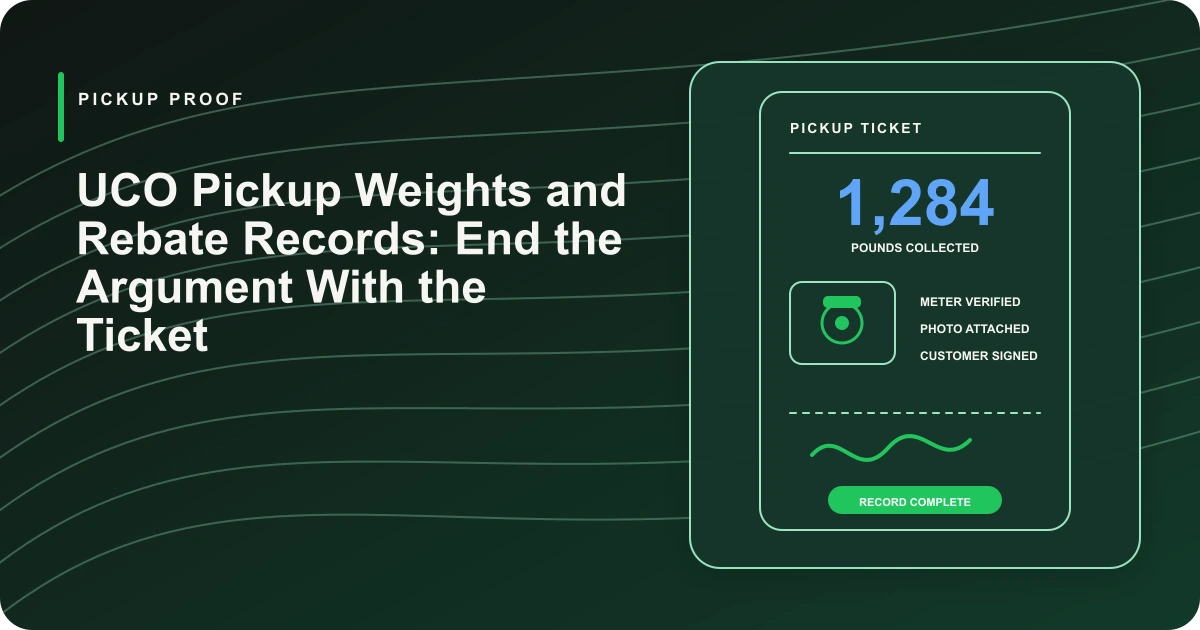
UCO Pickup Weights and Rebate Records: End the Argument With the Ticket
Restaurant, driver, and depot totals disagree because they measure different things at different moments. The per-stop record that reconciles them, the settlement math, and the dispute packet that ends rebate arguments.
Guide·July 31, 2026
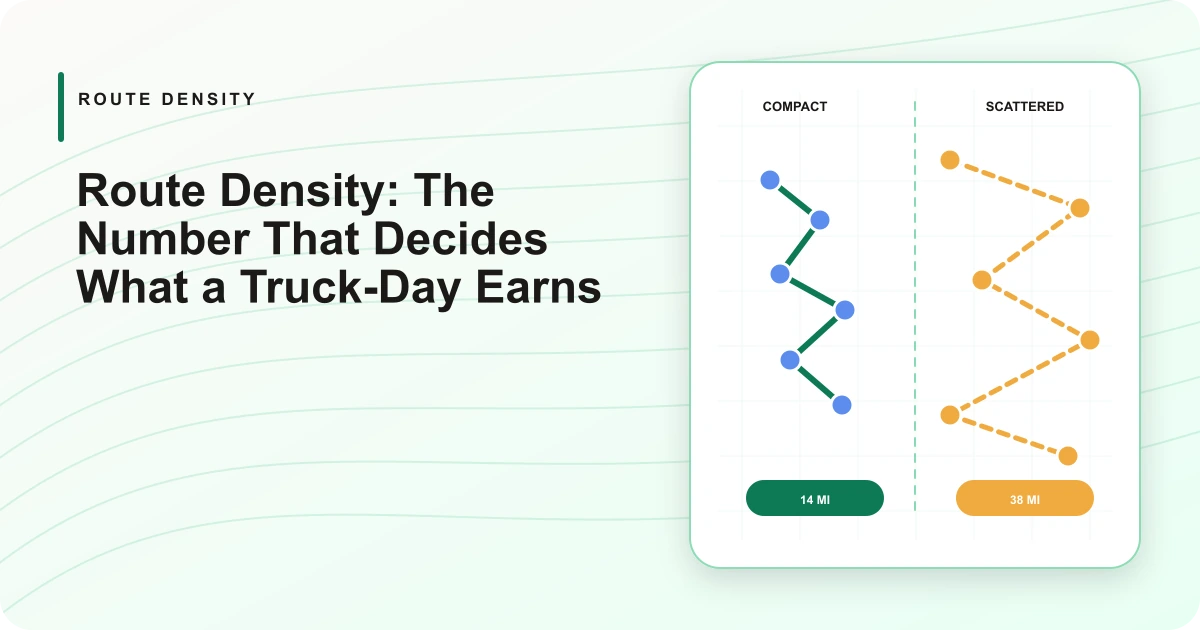
Route Density: The Number That Decides What a Truck-Day Earns
Same trucks, same drivers, different money — route density is usually the difference. Which density measure fits your trade, how to calculate it from one route, and when an off-route account is worth taking.
Guide·July 31, 2026
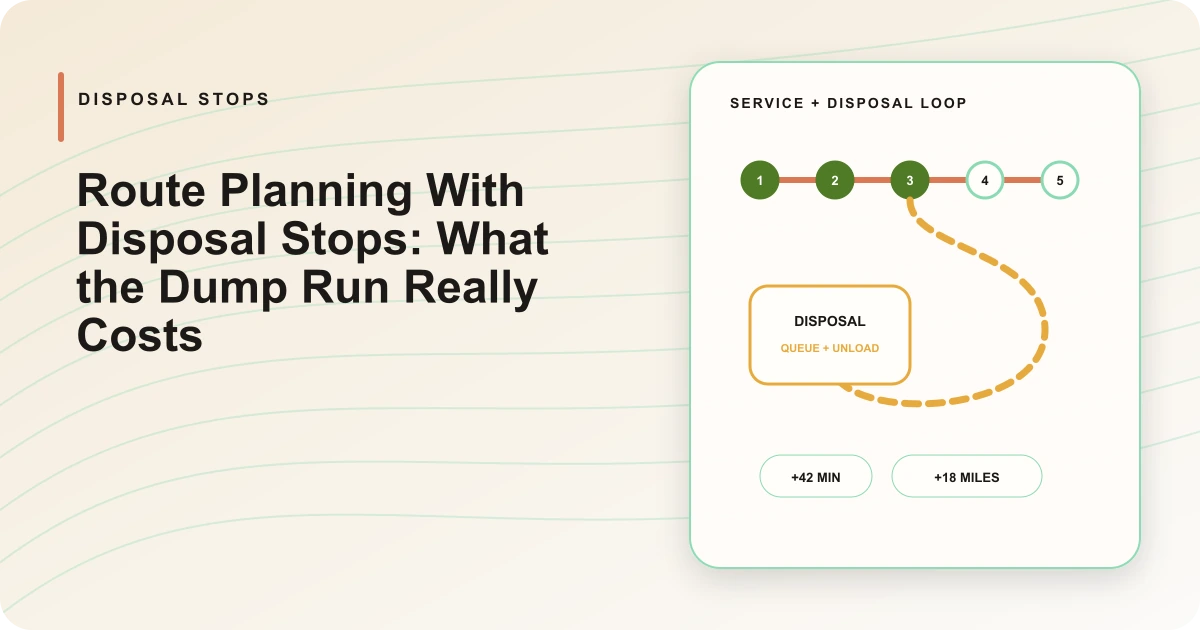
Route Planning With Disposal Stops: What the Dump Run Really Costs
Every disposal trip costs the route a leg out, a queue, an unload, and a leg back, plus a tip fee that varies fourfold by facility. The math for planning dump runs into the route, choosing the right facility, and spotting the stop that quietly triggers a whole extra trip.
Guide·July 30, 2026
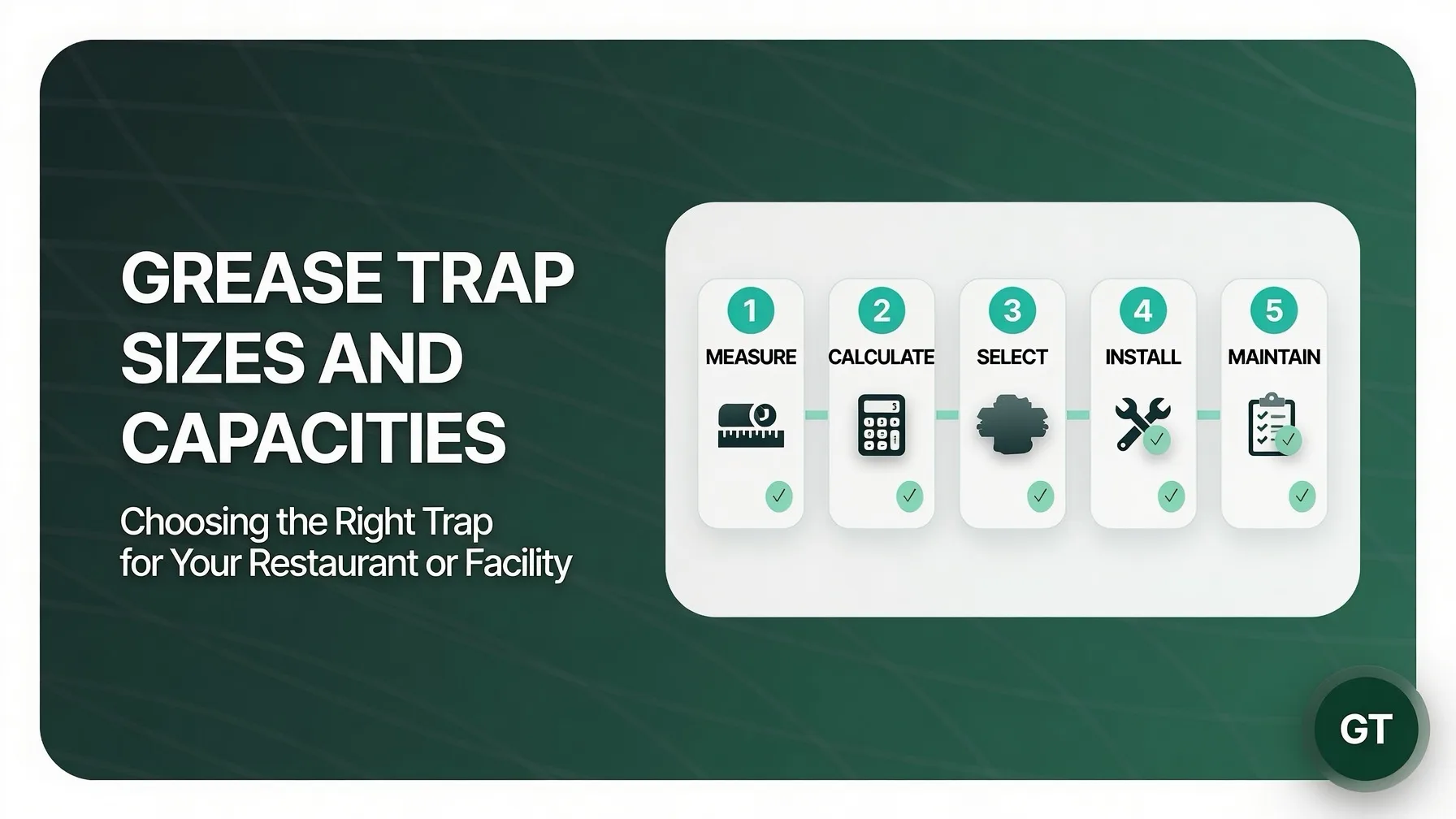
Grease Trap Sizes and Capacities: What Actually Ends Up in the Truck
The size on the customer record and the gallons that end up in the truck are different numbers. How to plan stops from real pump volumes, set stops-until-full per truck, and handle the stop nobody has sized.
Guide·July 30, 2026
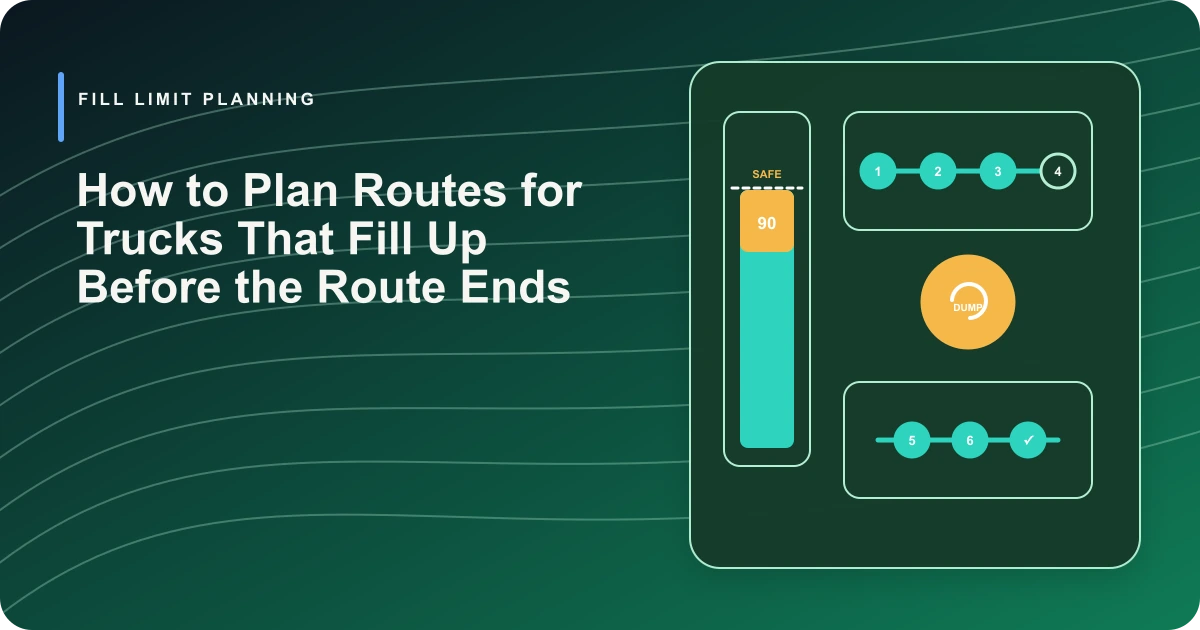
How to Plan Routes for Trucks That Fill Up Before the Route Ends
Your trucks hit capacity before the route ends. The working math: find each truck's binding limit, estimate every stop, size a buffer from your own overruns, and test the second trip against the clock before wheels roll.
Comparison·July 29, 2026
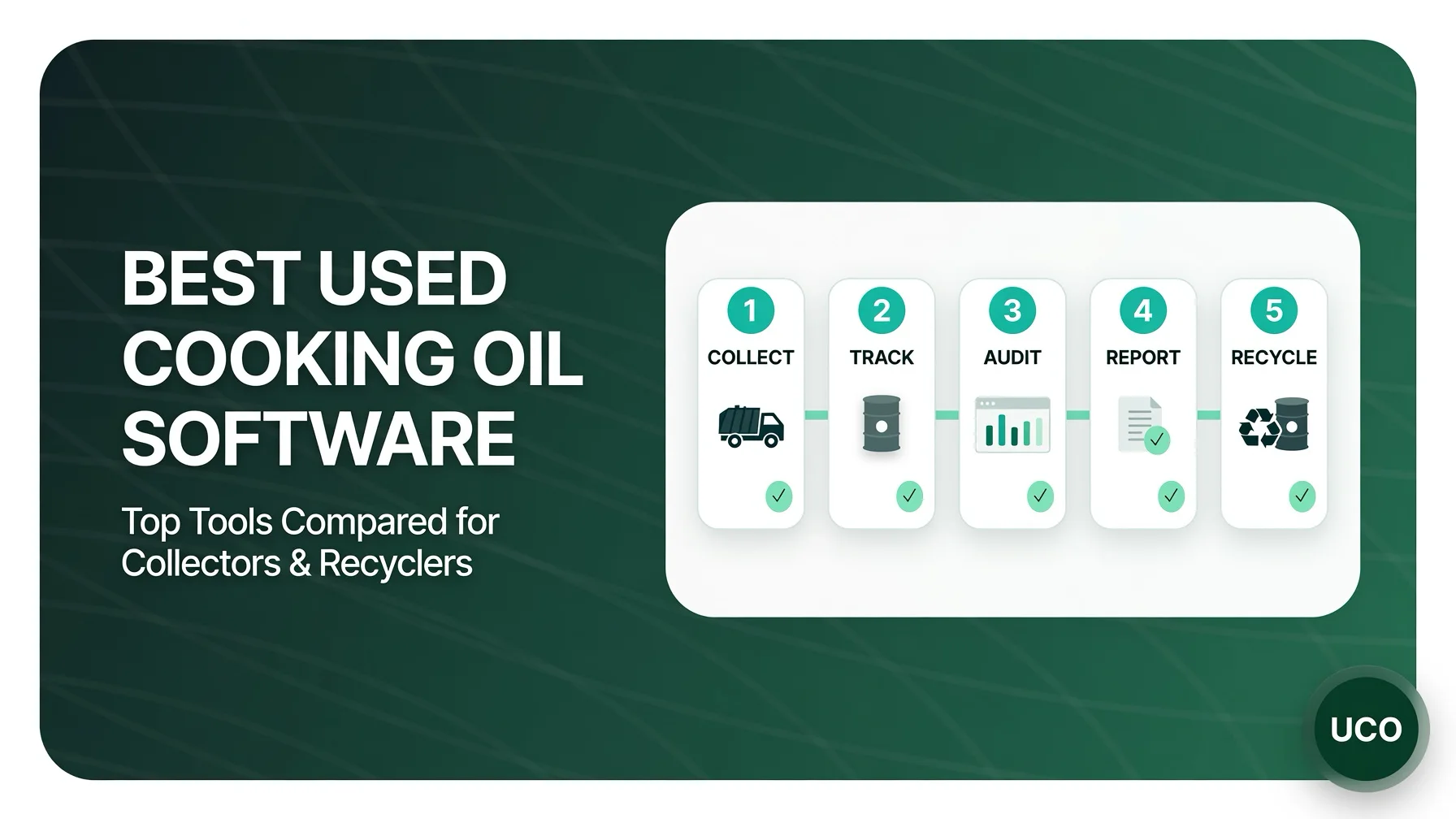
Best Used Cooking Oil Collection Software: An Honest 2026 Comparison
Nearly every "best UCO software" ranking online is written by a vendor about itself. This one shows dated prices, says "not public" where that is the truth, tells you who each tool is wrong for, and holds our own product to the same standard.
Comparison·July 29, 2026
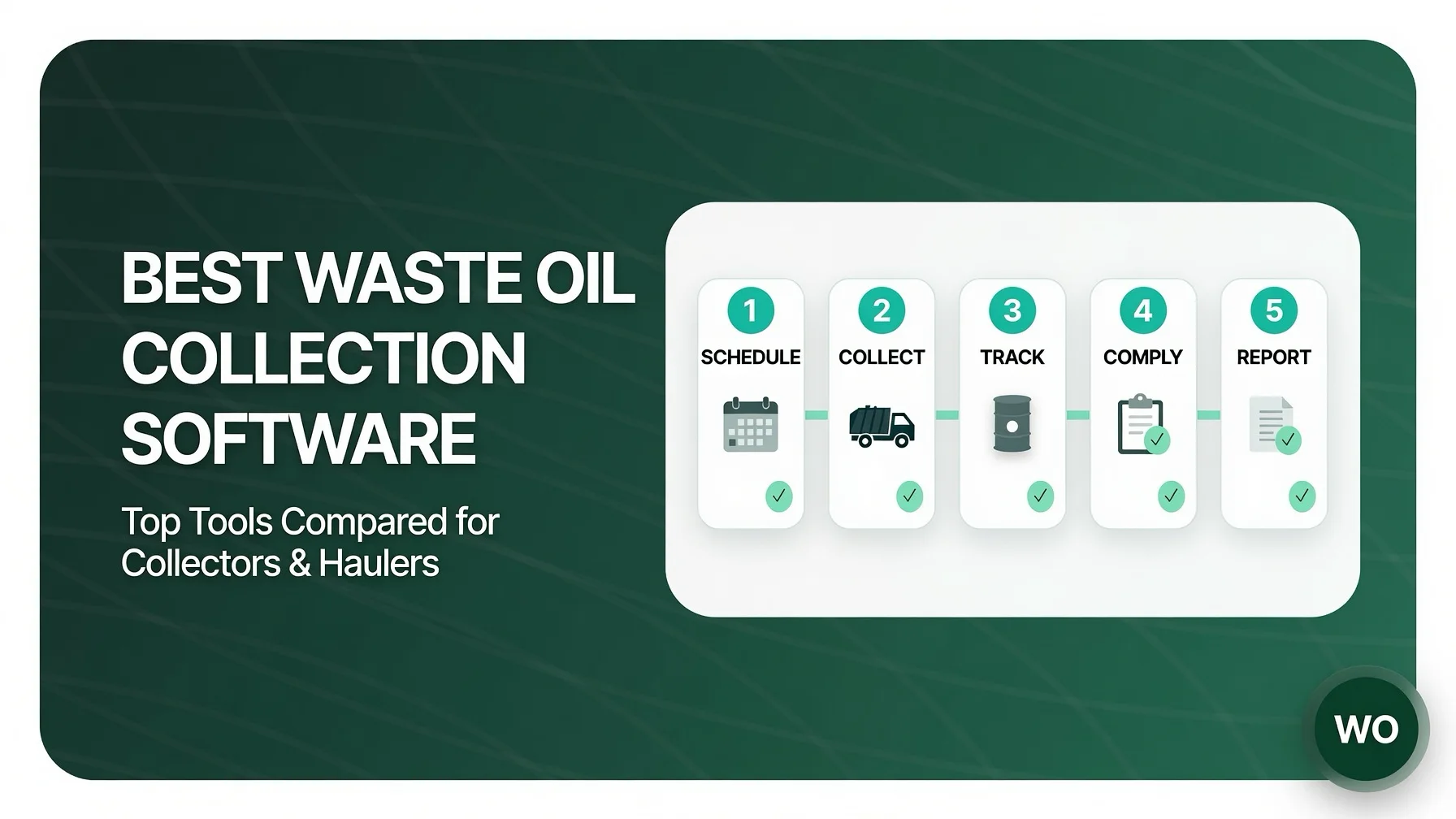
Best Waste Oil Collection Software in 2026: What Actually Fits a Motor-Oil Fleet
Search this phrase and you mostly get cooking-oil and solid-waste products wearing the name. This comparison sorts the seven credible tools by the trade each was really built for — dated prices, EPA Part 279 realities, and a skip-it verdict on every row, including our own.
Guide·July 29, 2026
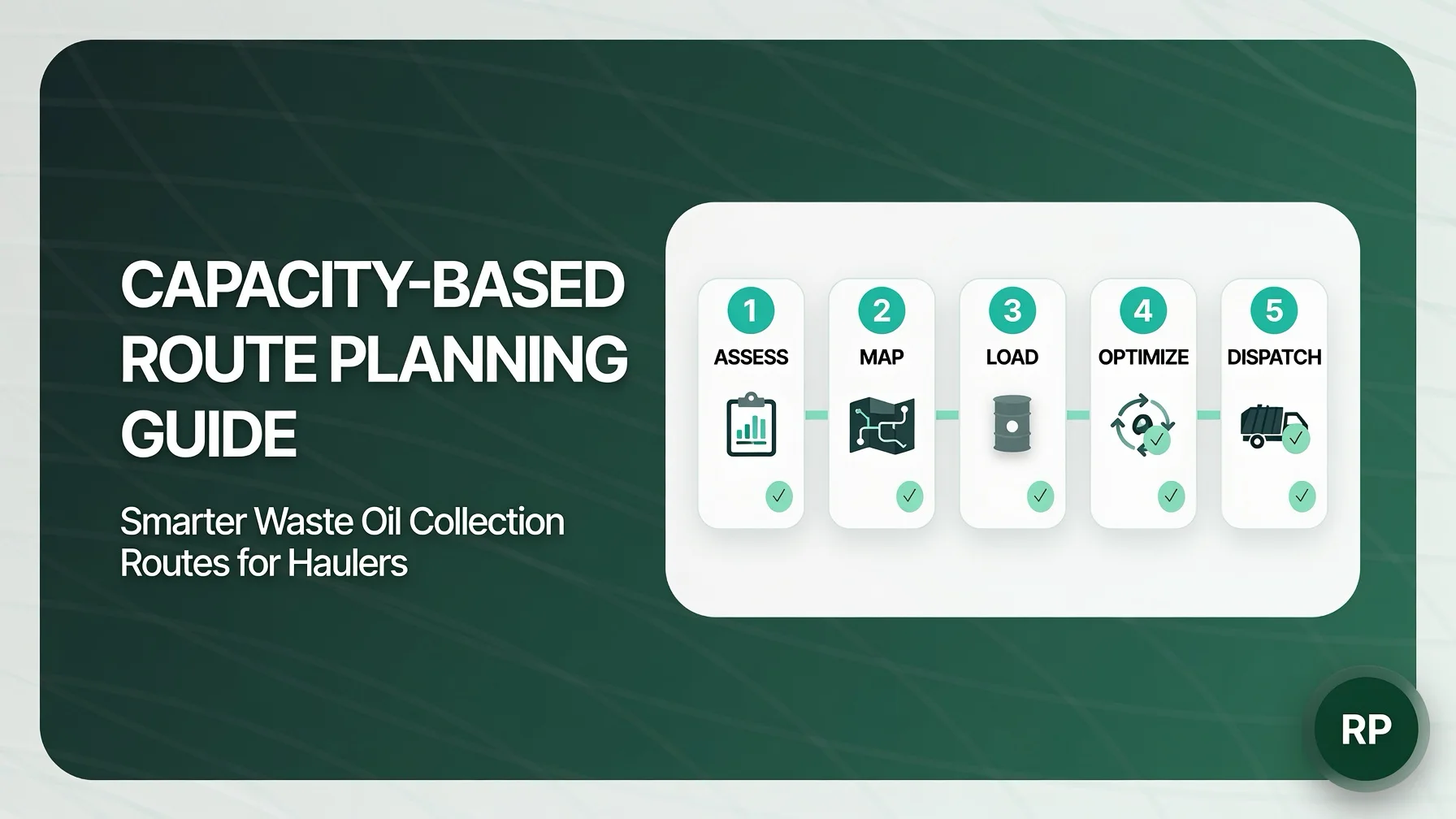
Capacity-Based Route Planning: Plan the Load Before the Miles
Trucks that hit capacity before the route ends need a different planning order. What capacity-based route planning is, how to pick your capacity unit, size a buffer, and plan dump runs, with worked examples across five trades.
Guide·July 28, 2026
Scheduling Grease Trap Routes Around Disposal Site Cutoffs
Due dates in a spreadsheet, capacity math in your head, and the receiving site's cutoff in a driver's memory. How grease trap pumpers schedule routes where all four constraints hold on the same day.
Guide·July 19, 2026
Emergency Grease Trap Pumping: Running the Emergency Line Profitably
Emergency pump-outs price at 50-100% over scheduled service and $400-800+ per call. How pumping operators build the emergency line as a business: pricing menus, call triage, and converting overflows into contracts.