The DynoRoute blog
Guide·August 20, 2026
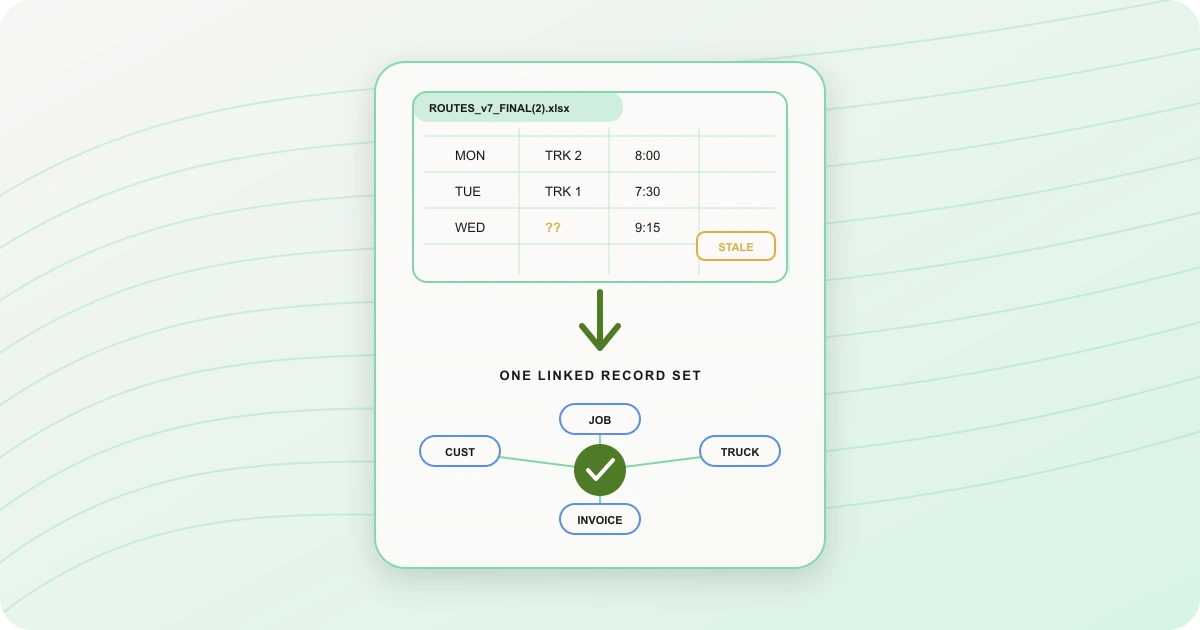
Dispatching With Spreadsheets vs Software: When the Sheet Becomes the Bottleneck
The spreadsheet works because your dispatcher's judgment does the real work. Here is the moment the sheet becomes the operating system, what staying manual costs each week, the five signals you have outgrown it, and how to migrate without losing a decade of route knowledge.
Guide·August 19, 2026
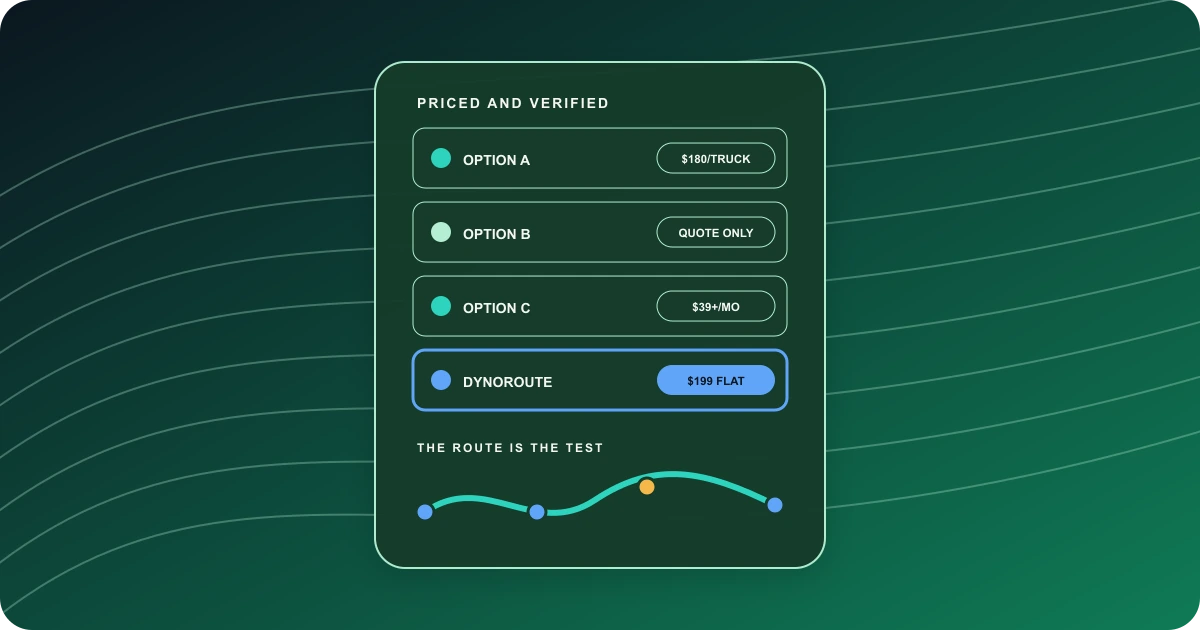
Best Septic Pumping Software in 2026: 7 Tools, Priced and Verified
Seven tools compete for a septic pumper's software budget, and only three publish prices. Every figure here was verified on the vendor's own page in August 2026, every review sample is dated and counted, and the maker of one of the seven tells you plainly who should buy something else.
Guide·August 19, 2026
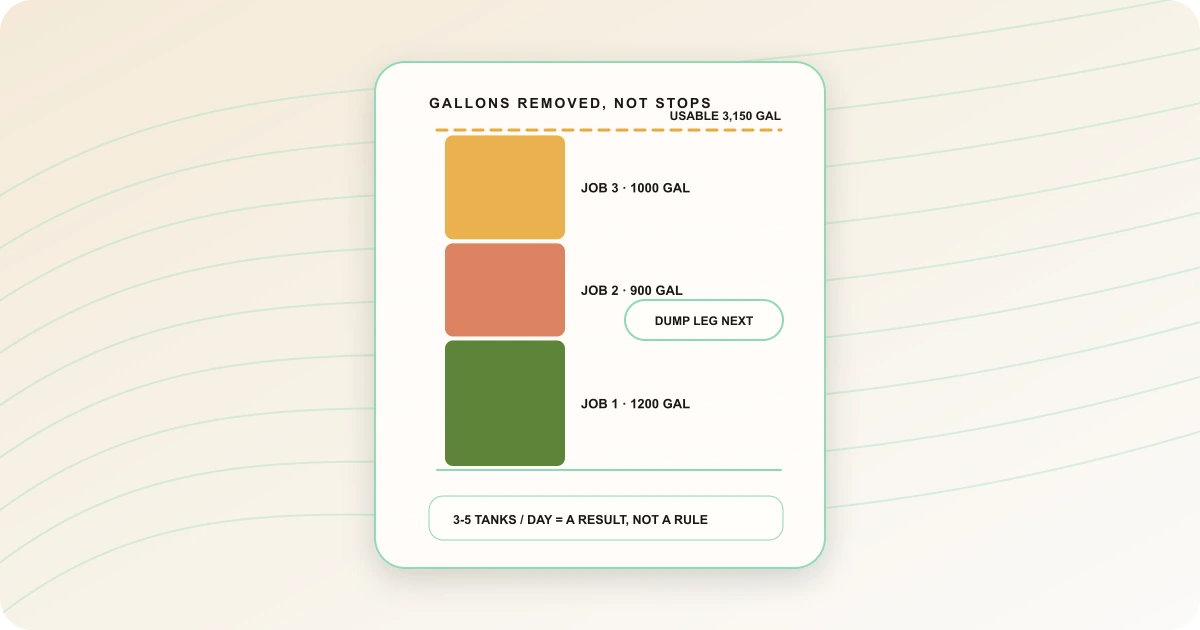
How Many Septic Tanks Can a Pump Truck Service Per Day?
A 3,500-gallon truck working 1,000-to-1,500-gallon household tanks meets the receiving facility every two or three jobs in an illustrative plan. Here is the capacity, time, payload, and disposal math that determines the real day.
Guide·August 17, 2026
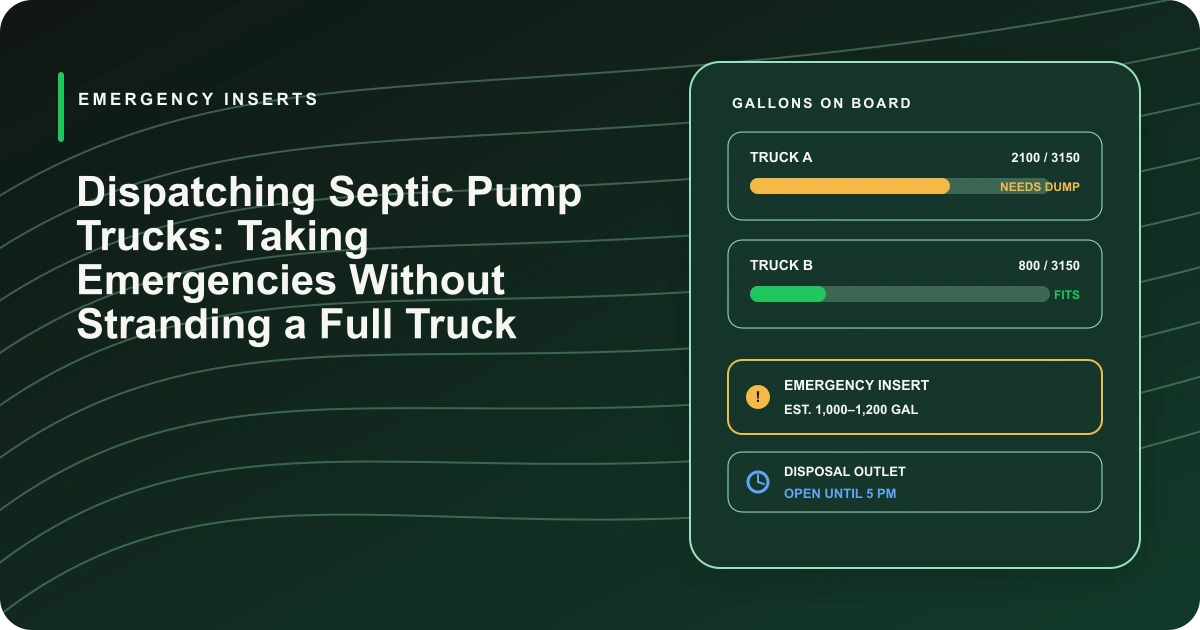
Dispatching Septic Pump Trucks: Taking Emergencies Without Stranding a Full Truck
Taking an emergency between route stops means knowing three numbers first: gallons already on board, the emergency's likely load, and a disposal outlet still open after the job. Here is the intake, the truck math, and the pricing that make the insert survivable.
Guide·August 17, 2026
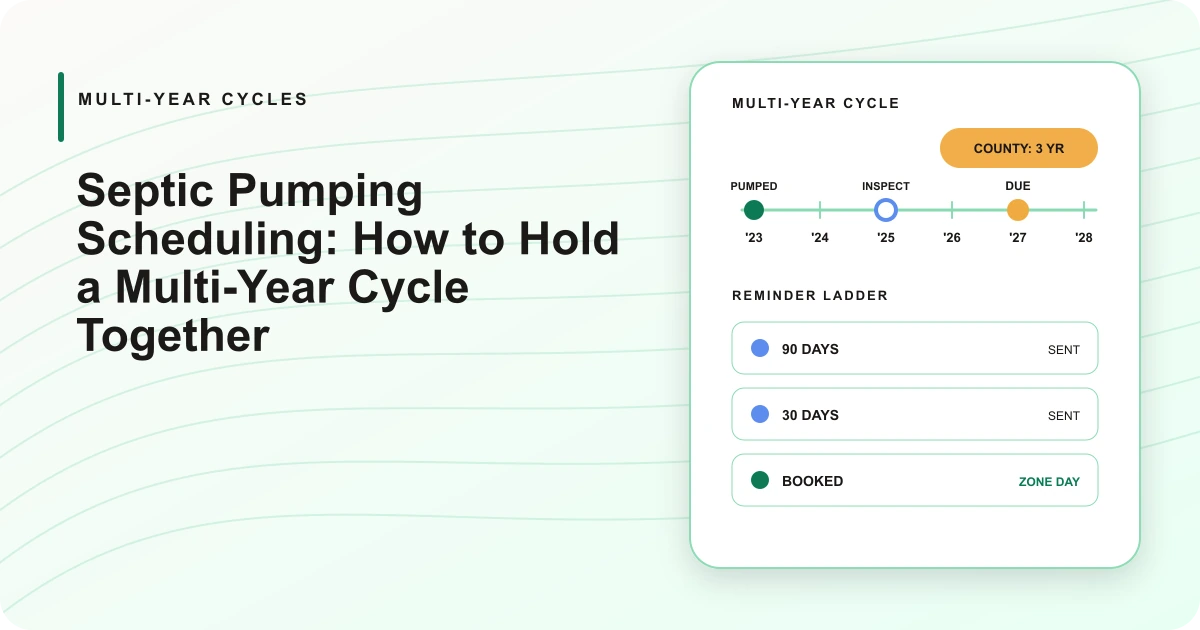
Septic Pumping Scheduling: How to Hold a Multi-Year Cycle Together
A septic tank comes due in years, not weeks, and a spreadsheet quietly loses the cycle somewhere in the middle. Here is the date that actually governs each property, the condition-based forecast, the reminder ladder, and the booking pattern that turns due tanks into dense routes.
Guide·August 11, 2026
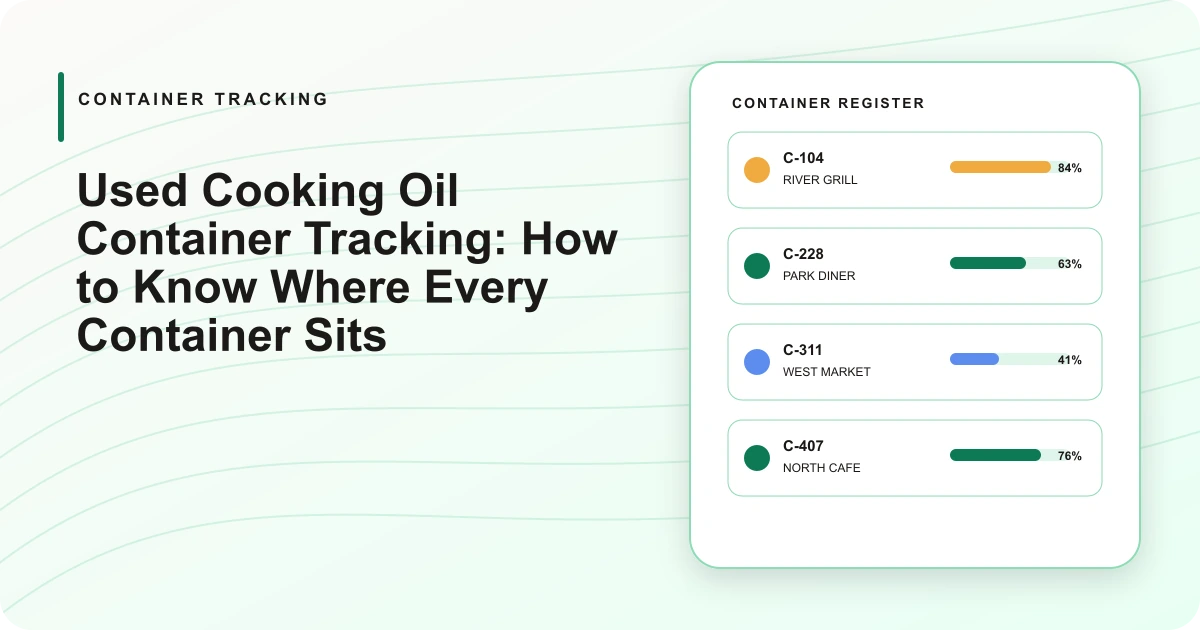
Used Cooking Oil Container Tracking: How to Know Where Every Container Sits
Containers go missing between events, not during them. Here is the container record worth keeping, the custody discipline that keeps it honest, and the math for deciding which containers earn active tracking.
Guide·August 11, 2026
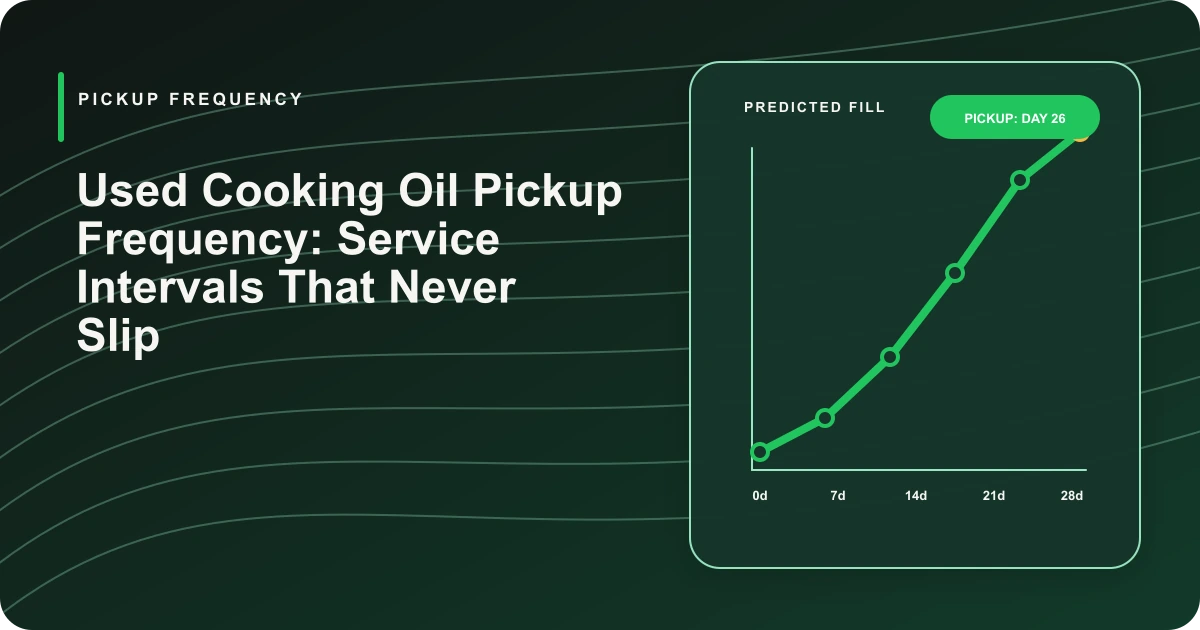
Used Cooking Oil Pickup Frequency: Service Intervals That Never Slip
Every pickup-frequency guide is written for the restaurant with one container. You schedule hundreds. Here is the per-container math for service dates that hold, and how to decide which accounts run cadences and which run triggers.
Guide·August 10, 2026
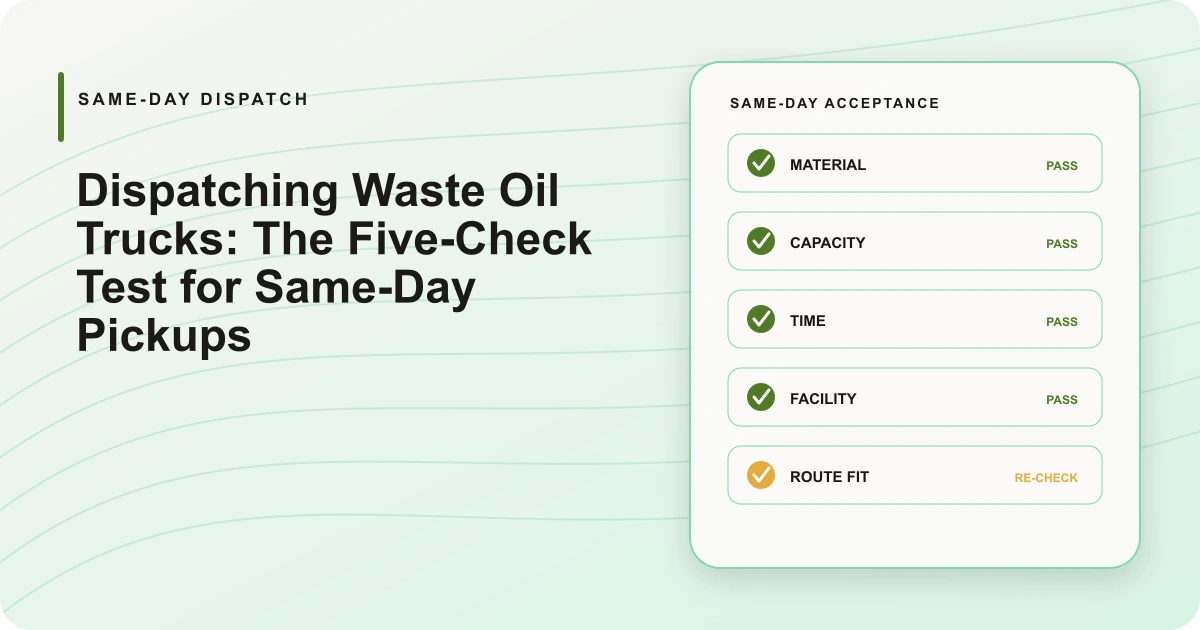
Dispatching Waste Oil Trucks: The Five-Check Test for Same-Day Pickups
A garage calls with a nearly full tank and wants pickup today. Here is the five-check test that turns that call into a decision you can make in minutes, and how to pick the truck that disrupts your day least.
Guide·August 10, 2026
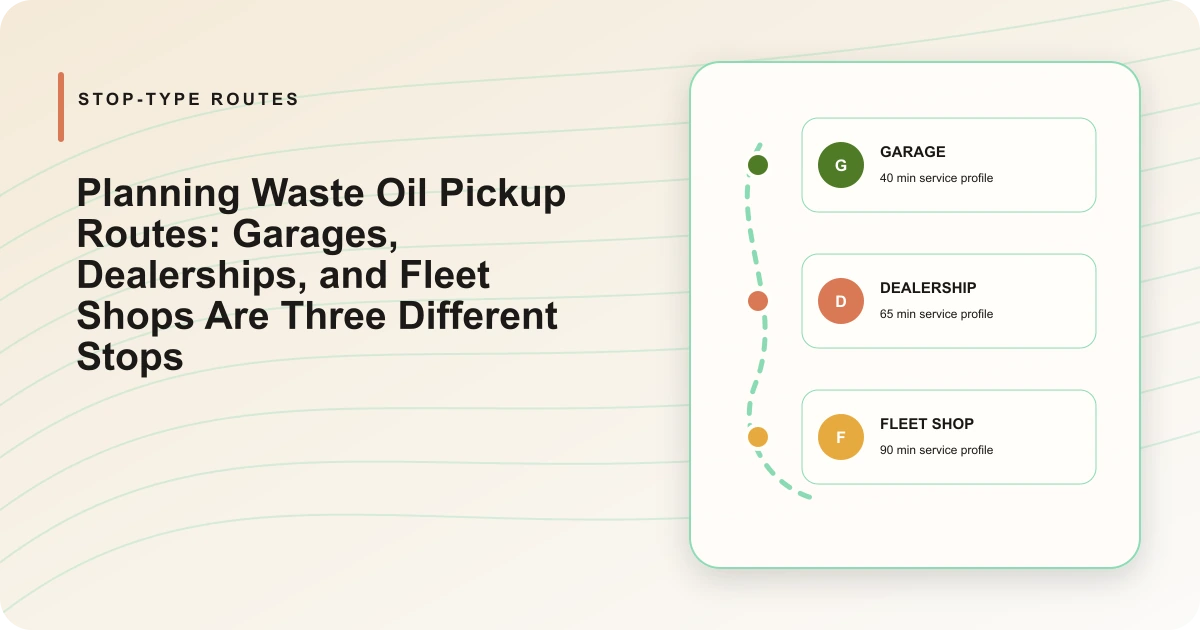
Planning Waste Oil Pickup Routes: Garages, Dealerships, and Fleet Shops Are Three Different Stops
A garage, a dealership, and a fleet shop can all hold waste oil and still belong on different routes. How to group stops, run the per-stop contribution math, and decide when a slow account earns a visit.
Guide·August 5, 2026
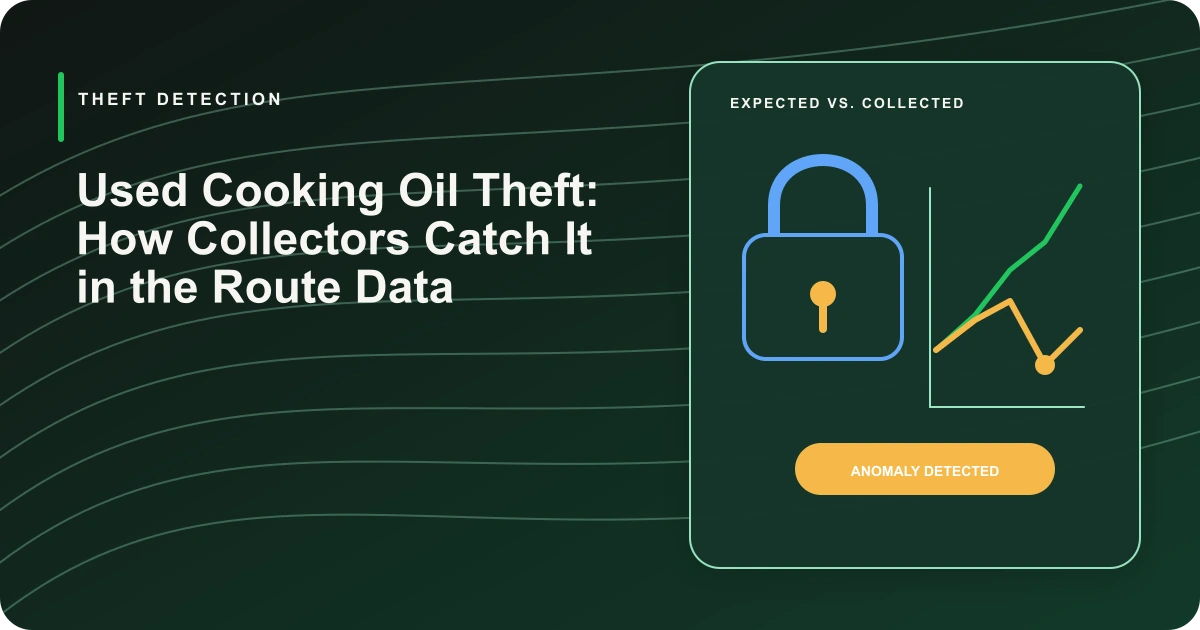
Used Cooking Oil Theft: How Collectors Catch It in the Route Data
Thieves hit your containers weeks before the month-end totals tell you. How UCO collectors spot per-stop losses fast, run the first hour, and keep rebates and records defensible.
Guide·August 5, 2026
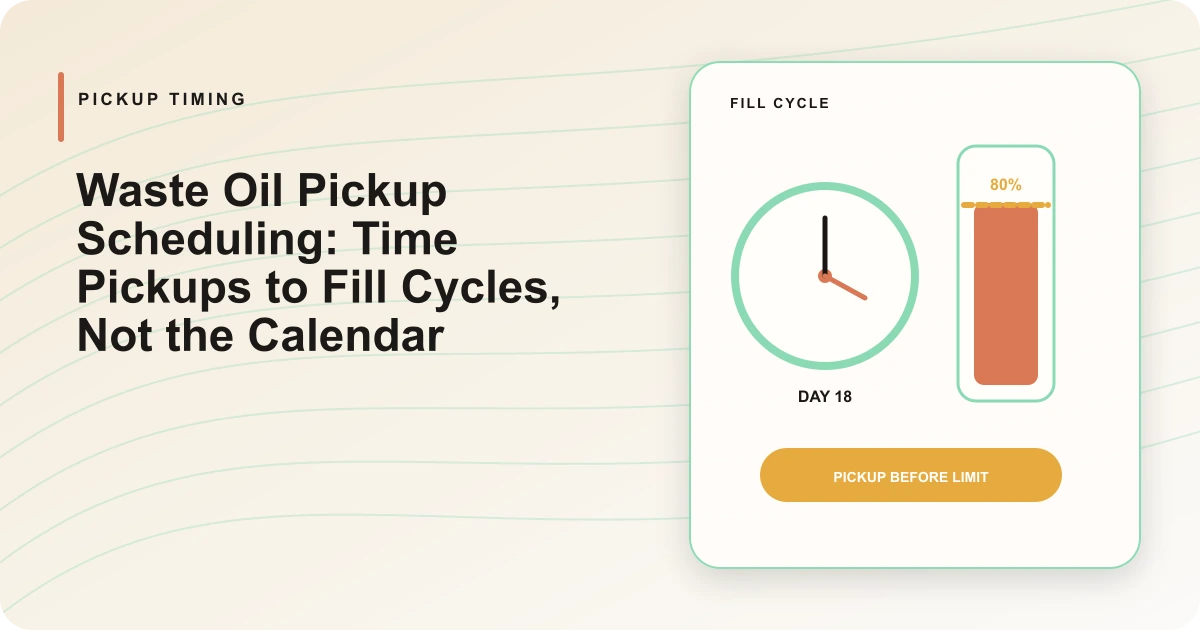
Waste Oil Pickup Scheduling: Time Pickups to Fill Cycles, Not the Calendar
Garage tanks fill at different speeds, so a fixed monthly route overflows your busy accounts and wastes stops on the slow ones. Here is how to compute a latest safe pickup date per account and schedule from fill cycles instead.
Guide·August 4, 2026
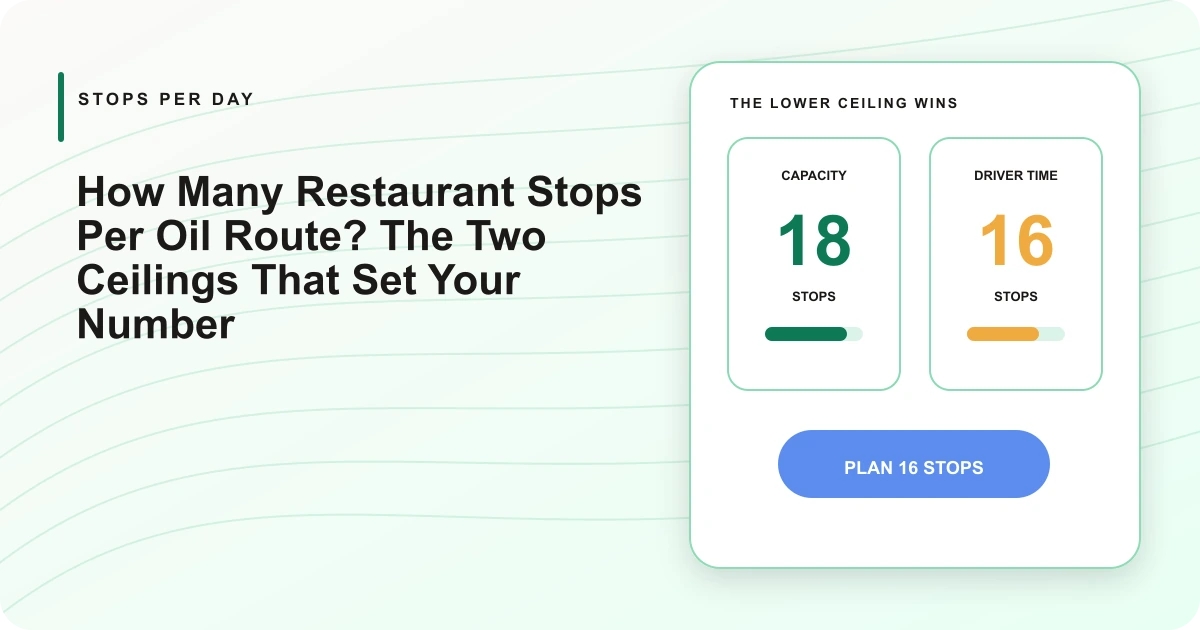
How Many Restaurant Stops Per Oil Route? The Two Ceilings That Set Your Number
No audited standard exists for UCO stops per day, and anyone quoting one is guessing. Compute your own number from the two ceilings, the tank and the clock, and see why the clock usually wins.