The DynoRoute blog
Guide·July 19, 2026
Grease Trap Manifest Requirements: What Haulers and Their Customers Must Keep
A grease trap manifest follows every load from the kitchen to the receiving facility: three signatures, three copies, and retention rules that run from one year to five depending on the city. What haulers and their customers each have to keep, jurisdiction by jurisdiction.
Guide·July 18, 2026
How Many Grease Traps Can a Vacuum Truck Service Per Day?
Most operators service 6-10 grease traps per day at $800-1,500 in revenue per truck. The real ceiling is set by trap mix, tank size, and disposal runs. Here is the arithmetic for counting your own.
Guide·July 18, 2026
Servicing Multi-Trap Locations: How to Track Every Grease Trap at Every Site
One address, four grease traps: multi-device sites are where customer-level records fail. How to build a device inventory, keep history per trap, and catch the skipped unit before the inspector's per-device database does.
Guide·July 17, 2026
Where Does Grease Trap Waste Go? Disposal Sites, Gate Fees, and the Route Math
Pumped grease trap waste travels to permitted receiving facilities: POTW stations, digesters, or landfill after dewatering. Real gate fees from municipal rate pages, and why capacity-based fees change how you route.
Guide·July 17, 2026
Grease Trap Route Density: The Economics of Stops Per Hour
Two pumping companies can charge identical prices and keep completely different margins, and route density is usually the difference. How to measure revenue per route-hour, put a dollar cost on windshield time, and price off-route work so it pays.
Listicle·July 16, 2026
Best Grease Trap Software: 7 Tools Compared for Pumping Operators
Seven grease trap software options compared honestly — including ours — with pricing as the vendors publish it, what each tool is genuinely best at, and who shouldn't buy it. Plus the distinction most lists skip: operator software versus the municipal FOG programs that share the search results.
Guide·July 16, 2026
Grease Trap Cleaning Frequency: Setting Service Intervals Across an Account Book
The 90-day/25% pair is only the default. Cleaning frequency is set by local ordinance, varies by trap type, and decides the annual revenue of every account. Here is how a pumping company sets intervals it can defend to customers and inspectors.
Guide·July 14, 2026
Dispatching Grease Trap Service Trucks
Grease trap dispatch is capacity math: every assignment starts from what's left in the tank, and every emergency forces a choice. Here is the insert-swap-split-defer ladder working dispatchers use to absorb overflow calls without breaking the stops they already promised.
Guide·July 14, 2026
Grease Trap Service Deadlines: How Pumping Companies Make Sure Nothing Slips
When a pumpout slips, the violation notice goes to your customer — and the lost account goes to you. How working operators track service deadlines with weeks-to-go counters, honest overdue lists, reattempt lanes, and records that hold up in an inspection.
Guide·July 13, 2026
How to Plan Grease Trap Pumping Routes
Grease trap routes break when the tank fills, not when the miles run out. Here is how to plan pumping routes around service intervals, truck capacity, and disposal runs — with the numbers that decide whether a route day makes money.
Guide·November 10, 2024
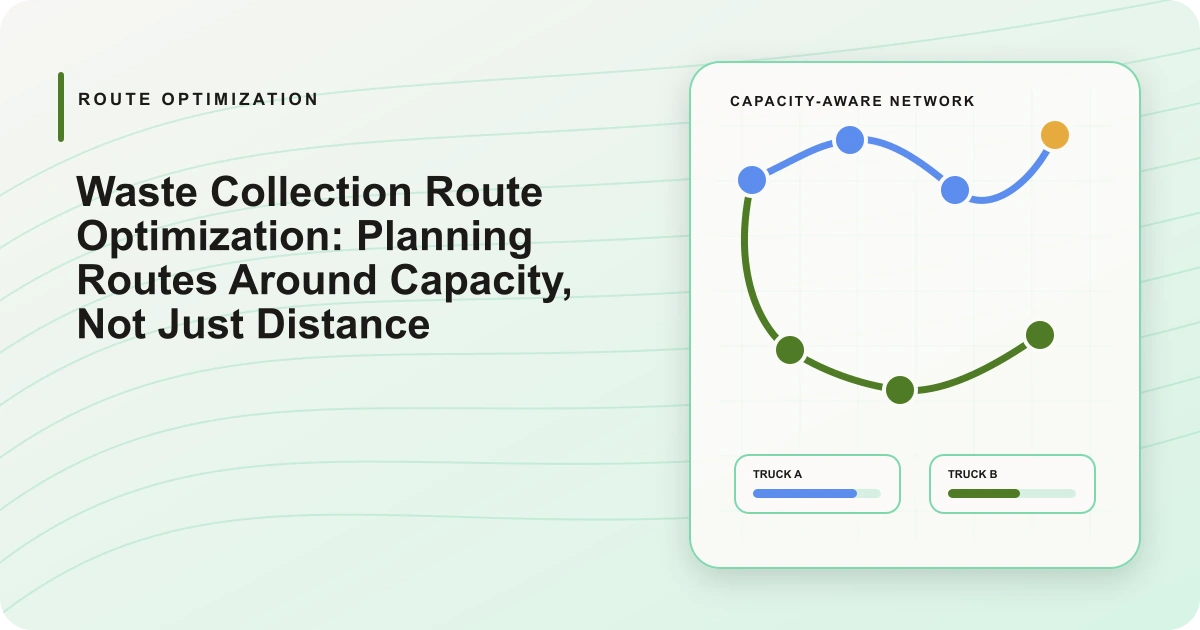
Waste Collection Route Optimization: Planning Routes Around Capacity, Not Just Distance
Shortest-distance routing breaks the moment a truck fills up. What route optimization actually solves for a waste fleet: capacity limits, disposal returns, balanced days, and plans that survive same-day changes.
Guide·March 22, 2024
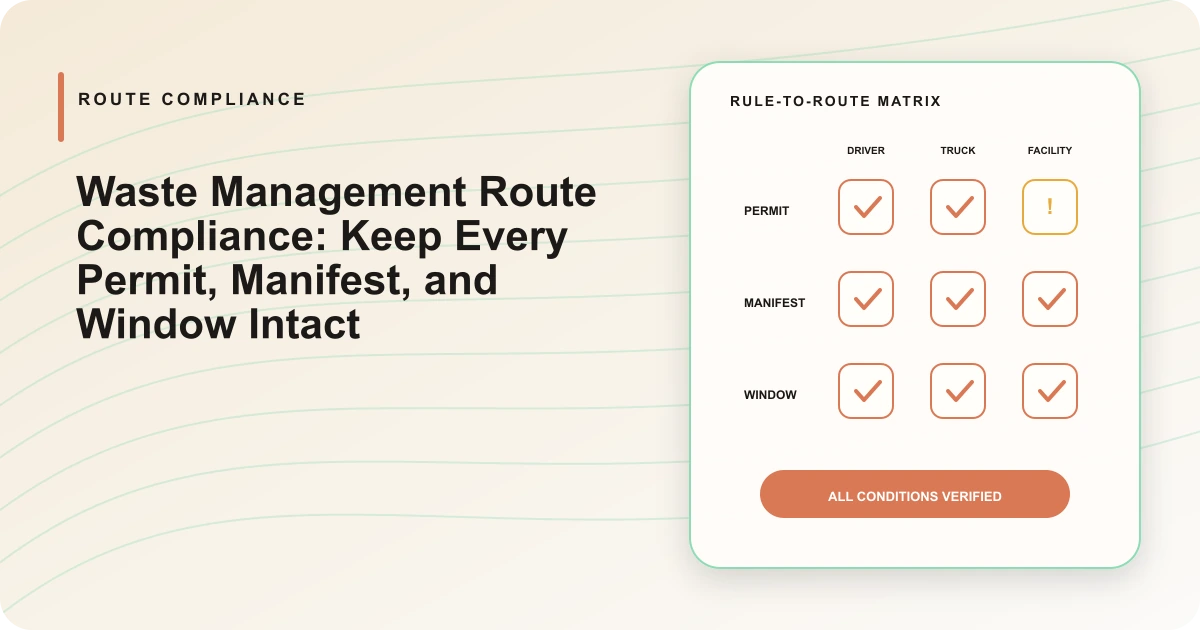
Waste Management Route Compliance: Keep Every Permit, Manifest, and Window Intact
Compliance rules attach to six objects on every collection route. Map them, classify each load, validate before dispatch, and keep the evidence chain intact when the day goes sideways.