Septic pumping software

Septic pumping software that plans for the next unload.

DynoRoute connects septic service scheduling, pump-truck routing, AI dispatch, property records, field forms, and invoicing.

Build a day that accounts for the gallons coming in, the disposal trip, and the appointments still ahead. Give every driver the property details they need—and your office a complete record to bill from.

  • Capacity-aware pump-truck routes
  • Disposal returns in the plan
  • Property-to-invoice records

Last updated October 13, 2026

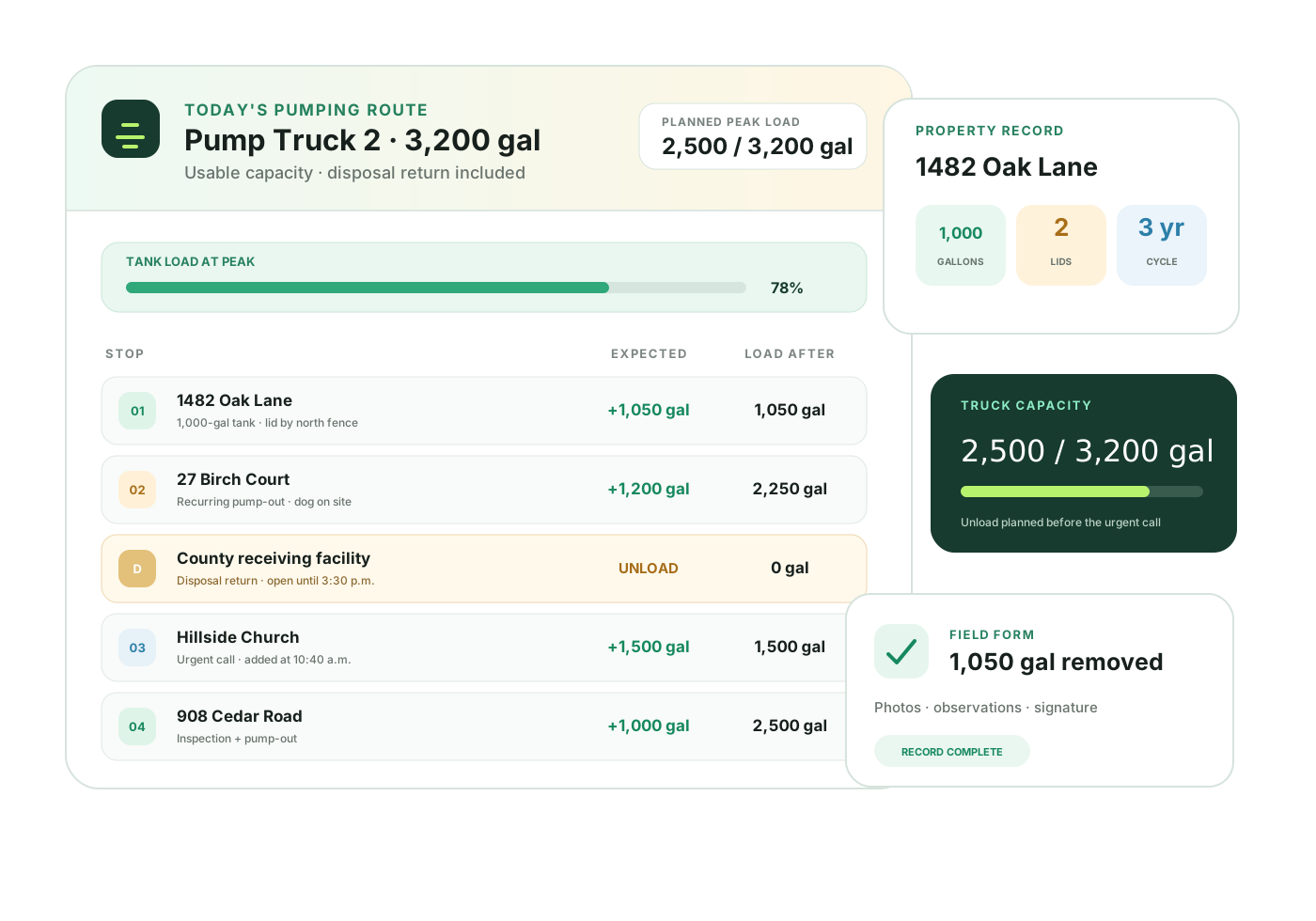
A septic pump-truck route in DynoRoute with expected gallons per property, a disposal return planned before the tank limit, and the property record for the next stop

Capacity before the calendar

The calendar has room. Does the truck?

An open appointment slot tells you only part of the story. The truck needs enough tank capacity, the driver needs time at the property, and the load still needs an unload. DynoRoute brings those planning constraints into dispatch, with the customer and service records close at hand when the day changes.

Before you confirm the bookingWhat the day has to fit
  1. 01An open appointment slot
  2. 02Tank capacity left on the truck
  3. 03Driver time at the property
  4. 04Where the load unloads

One connected workflow

Keep the whole pump-out connected.

Carry the information from the first booking through the visit, disposal record, and invoice. The next driver should not have to start the property history again.

  1. 01

    Book

    Capture the service request, property address, access instructions, expected work, and appointment window.

  2. 02

    Plan

    Match the job to a suitable truck and driver. Account for tank capacity, working hours, travel, and disposal returns.

  3. 03

    Record

    Use a mobile form for gallons removed, observations, photos, signatures, and follow-up work.

  4. 04

    Invoice

    Carry recorded job charges into billing, attach supporting records, and review the next service action.

From the office to the field

Septic service software for the work around every pump-out.

Give the owner, dispatcher, driver, and office a connected view of the customer, property, schedule, and completed work.

Septic service scheduling01

Keep the next service date connected to the property.

Store the agreed next-service date and use recurring jobs for repeat work. Keep inspections, pump-outs, and repairs distinct with job templates and forms. Your team sets the schedule using the property's history and service requirements.

  • One-time and recurring jobs
  • Property-specific dates and instructions
  • Separate service types and checklists
Pump-truck route planning02

Put the unload into the route before the tank fills.

Configure usable vehicle capacity and job demand so the plan accounts for the load. Include disposal returns alongside customer stops, travel, and working hours. Review the receiving facility and its opening window before dispatching the route.

  • Vehicle capacity and load inputs
  • Disposal returns planned into the day
  • Travel and service-time constraints
Septic dispatch03

Find a workable place for the urgent call.

AI suggestions help match the job to an available driver using location, skills, workload, and scheduling constraints. Review the recommendation and its reasoning, then accept or change the assignment. Conflict checks flag double-bookings and travel that cannot fit.

  • Map and timeline dispatch views
  • Recommendations with reasons
  • Review before committing the change
Property and tank records04

Send the access notes with the driver.

Configure linked property and tank records for system details, lid locations, access instructions, photos, and service history. Keep the service address distinct from the billing contact. When the assigned driver changes, the recorded details stay available to the team.

  • Configurable property and tank fields
  • Customer and job relationships
  • Photos, documents, and service notes
Septic field forms05

Capture the visit while the crew is still there.

Give each service type its own form. Record the work performed, quantity removed, observations, disposal details, and customer sign-off where needed. Drivers can complete mobile forms offline and sync when connected, rather than leave the office to reconstruct the visit.

  • Required fields and job checklists
  • Photos and customer signatures
  • Offline forms with later sync
Invoicing and QuickBooks06

Turn the completed job into a bill you can explain.

Create an invoice using the job's line items, labor, and materials. Review pumping charges, access work, and disposal charges as separate items where appropriate. Connect invoices and payments to QuickBooks Online where included in your plan.

  • Job-to-invoice conversion
  • Supporting files and service records
  • Payment status and accounting sync

Same-day changes

Check what changes after the extra pump-out.

A job may fit the tank and still disrupt the afternoon. Use the dispatch map and schedule to review the remaining appointments, travel, and working hours. Keep the expected quantity and disposal stop in that decision, then update the affected assignment instead of working from a stale printed route.

Urgent pump-out requestConfigured workflow
  1. 01Review the request
  2. 02Check truck and driver
  3. 03Review the unload
  4. 04Update the schedule

Reminders and follow-up

Keep the next service date from slipping past.

Configure reminders around the service dates your team records. Use workflows for appointment messages, invoice follow-ups, and office tasks after a visit. Keep calls, messages, and job history connected so the next conversation starts with what you already know about the property.

Fit for your operation

Keep your service judgment. Give it a reliable record.

DynoRoute is built for operations coordinating pumping work around truck limits, service commitments, and disposal returns. It gives you configurable records and forms; your team determines the inspection method, maintenance interval, and required paperwork. Bring any county forms, specialist inspection reports, or receiving-facility requirements to the evaluation so we can check the workflow you need.

Getting started

Start with a real route and the records behind it.

  1. 01

    Bring your customer data

    Import customer contacts from CSV or Excel. Configured property and tank records currently need to be created individually, so include that work in your migration plan.

  2. 02

    Set the operating constraints

    Configure truck capacity, driver availability, service areas, job durations, and the disposal stops used by your team.

  3. 03

    Follow one job through

    Test booking, dispatch, the driver's form, the service record, and the invoice. Include an urgent addition before you roll out.

Published pricing · No per-seat fees · CSV and Excel customer import

Bring a representative week to the intro call and we’ll walk through the setup with your own jobs, trucks, and records.

Operator guides

Practical guides for septic pumping operations

Work through service cycles, urgent dispatch, daily truck capacity, and software fit in more detail.

Servicing portable restrooms as well? Deliveries, swaps, unit records, and recurring service run in the same system.

See porta potty software

Questions operators ask

Septic pumping software FAQs

Details to help you evaluate how DynoRoute fits your pumping operation.

What is septic pumping software?

Septic pumping software helps a service business organize customers, properties, bookings, truck assignments, field records, and billing. DynoRoute adds capacity-aware routing and AI dispatch so the day's plan can account for pump-truck limits and disposal returns.

How does DynoRoute plan routes around truck capacity?

You configure vehicle capacity and provide job-demand information. The plan uses those limits alongside scheduling constraints and can include disposal returns before continuing the route. Keep load inputs current; the plan depends on the quantities your team records.

Can I include disposal trips in a septic route?

Yes. Disposal returns can be included in the route instead of left as an unplanned detour. Review the facility, travel time, unloading time, and opening window as part of setup. Your team remains responsible for confirming that the facility can accept the load.

Can the software manage recurring pump-outs and reminders?

Yes. DynoRoute supports recurring work and configurable reminder workflows. Record the next-service date or repeat pattern your team has chosen for the property. The software follows that setup; it does not diagnose the tank or decide when pumping is technically required.

Can I keep tank details and service history for each property?

Yes. Configure property and tank records with the fields your business uses, such as system type, tank size, access notes, and last-service information. Link those records to customers and work so the office and returning crew can find the relevant history.

Can drivers complete septic service forms offline?

Yes. Mobile forms support offline data entry, photos, and signatures. The records synchronize when the device reconnects. Prepare the forms before the visit and confirm synchronization once coverage returns.

Does DynoRoute provide septic inspection or disposal forms?

DynoRoute provides configurable job forms, rather than a promise that one template meets every authority's requirements. Build the fields and attachments your operation needs, then have the relevant requirements checked before using the form for regulated reporting.

Does it work with QuickBooks?

Yes. QuickBooks Online integration supports invoice and payment synchronization with an eligible plan and configured connection. Job details can carry into invoices for review before sending. Confirm your accounting version and mappings during setup.

How much does septic pumping software cost?

DynoRoute publishes three flat monthly plans at $199, $499, and $999, with credits for route optimization and other actions and no per-seat fees. The pricing page lists current plans, included credits, and top-ups.

What should I bring to an intro call?

Bring a typical day's jobs, your truck capacities, usual disposal locations, a sample service form, and the spreadsheet or system you currently schedule from. We can use those to discuss workflow fit and the relevant published plan.
Start with a real pumping day

Put your next pumping day on the table.

Bring the appointments, truck limits, disposal stops, and property records that shape your day. In a 30-minute intro call, we’ll walk through how DynoRoute would fit the way you work.