Dynamic routing by UCO container fill level means a used cooking oil pickup goes on the route when the container is ready, not when the calendar says so. The fill level comes from a sensor reading or from the account's pickup history. A threshold you choose flags the stop. Then the route has to fit the flagged stops into what each truck can still hold, including the trip to unload. Get both halves right and trucks stop driving to half-empty containers while full ones stop overflowing.
Disclosure: DynoRoute makes route and dispatch software for used cooking oil collectors, and it appears in this guide.
Key Takeaways
- Fill level can come from sensors or from each account's pickup history. Most collectors run both: sensors on high-volume or theft-prone accounts, history everywhere else.
- FoxInsights reports that without monitoring, collections spread across the 30 to 100% fill range, and with level-based planning they concentrate at 80 to 90%. These are vendor figures, not an industry average.
- A dry run is expensive. At ATRI's 2025 average of $2.336 per truck mile, a 20-mile round trip costs about $47, which is $0.39 a gallon at a 40%-full 300-gallon container and about $0.20 at 80% full.
- A fill trigger tells you which containers are ready. It does not tell you whether the truck has room, so the unload trip has to be planned into the route.
- The dispatcher should keep the final call. A mid-day spike or a sudden drop is a decision, not an automatic reroute.
What Is Dynamic Routing by UCO Container Fill Level?

Dynamic routing by UCO container fill level is a way of building used cooking oil routes from what is ready to collect. A fixed route visits the same accounts on the same day every week or every month. A fill-level route starts from a queue of containers that have reached, or will soon reach, the level you want to collect at.
The difference matters because restaurants do not fill containers at a steady rate. FoxInsights' April 2026 guide on calendar versus level-based collection puts it plainly: a restaurant's oil volume follows covers served and menu, which change daily, weekly and by season. A route sheet copied from last Tuesday ignores all of that.
What it is not:
- It is not a sensor. A sensor reports a level. Routing decides which truck goes, in what order, and where it unloads.
- It is not the same as pickup frequency. Setting how often each account should be served is covered in our guide to scheduling recurring used cooking oil pickups. This page is about how the day's route is built and changed once fill data arrives.
- It is not container inventory. Knowing which container sits at which account is UCO container tracking.
Where Does the Fill Reading Come From?
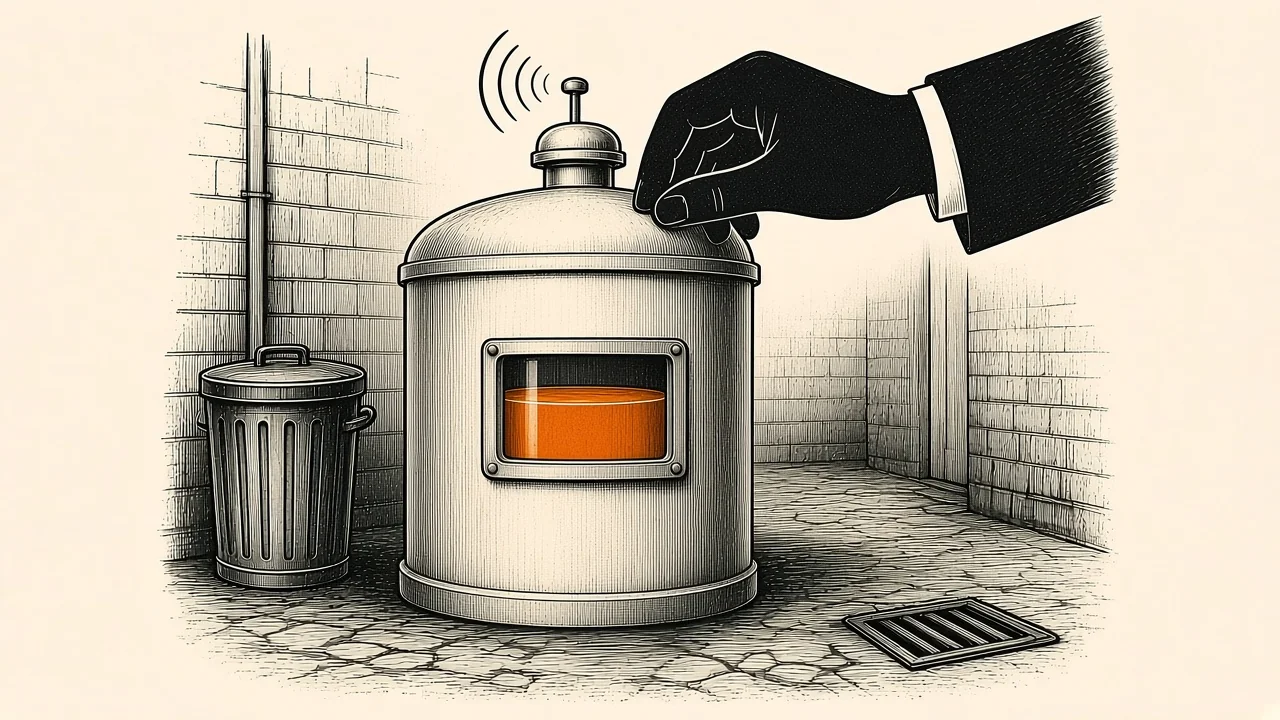
There are two sources, and they work together.
1. Fill-level sensors. A sensor on the tank measures the oil level and sends it over a cellular or low-power network. Vendors use radar, pressure and ultrasonic devices. FoxInsights says its sensors take an automated daily reading. BrighterBins describes ultrasonic sensors on LoRaWAN, SigFox, NB-IoT and LTE CAT-M1 networks with batteries that last up to 8 years. When a reading crosses your threshold, the container becomes a candidate stop.
2. Pickup history (no hardware). The software projects each account's fill from its own past pickups: gallons per pickup, days between pickups, and seasonal swings. The account is scheduled for the day its estimated fill reaches the threshold. Route Simplified, for example, describes "fill rate tracking to predict when each client's tank will be full."
Sensors cost money per container, so most collectors put them where a surprise hurts: big fryers, accounts with past overflows, and sites where oil has gone missing. Everyone else runs on history.
What Fill Level Should Trigger a UCO Pickup?
There is no regulated number. The level is your choice, and it trades yield against overflow risk. FoxInsights reports that in its partner operations, collections under calendar routing were spread across 30 to 100% full, with a large share below 70%. After switching to level-based planning, they concentrated at 80 to 90%.
Three things push your number up or down:
- How fast the account fills. A container that gains 10% a day needs a lower trigger than one that gains 2% a week, because the truck may not get there for two or three days.
- How dense the route is. If you pass an account every week anyway, you can collect it at a lower level for almost no extra cost.
- Theft and overflow risk. Full outdoor containers attract theft. Our used cooking oil theft guide covers the signs.
Treat any number, including 80%, as a starting setting you adjust per account after a few cycles.
How Does a Sensor Reading Become a Stop on the Route?
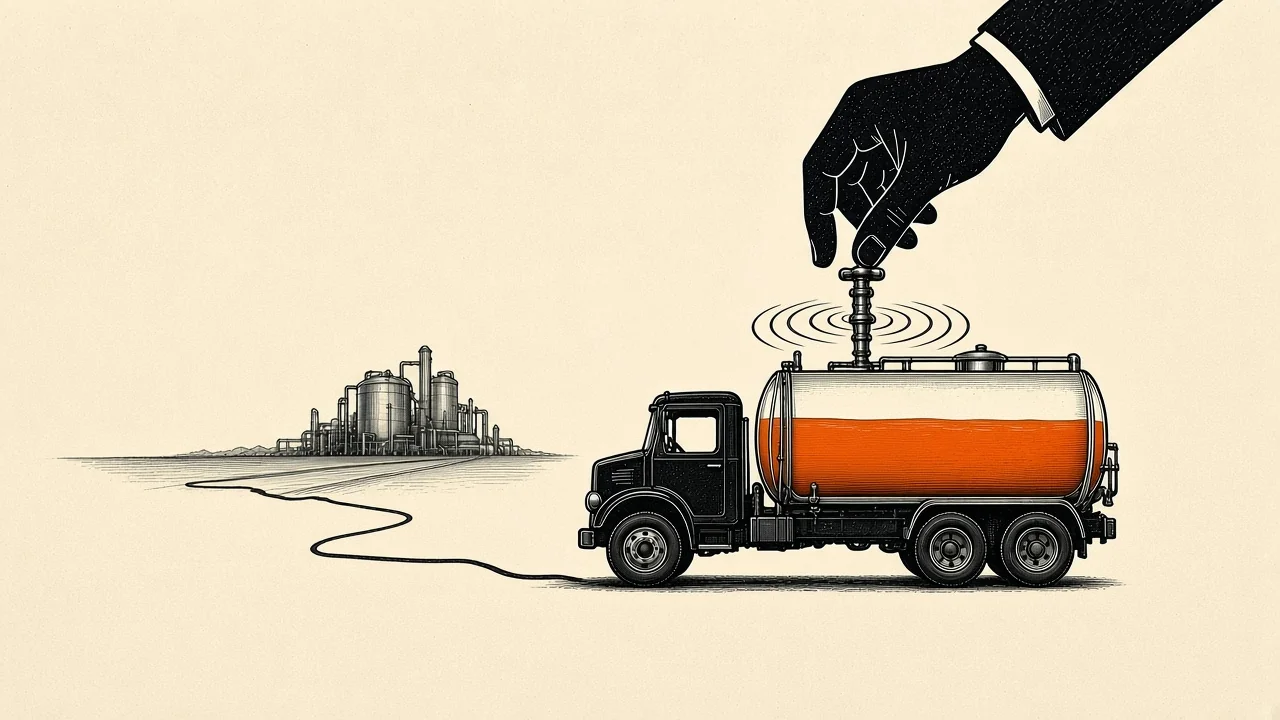
A reading turns into a dispatched stop in five steps.
- Read. The sensor reports the level, or the forecast estimates it from history.
- Flag. The container crosses your threshold, or is forecast to cross it inside your planning window, and joins the ready queue. The same feed can raise two other alerts: a container close to overflowing, and a sudden drop that may mean theft. Sensoneo and Enevo both describe sudden-drop alerts for this reason.
- Group. Ready stops are grouped by area so one truck covers a tight cluster instead of crossing the county for one container.
- Fit to the truck. The grouped stops are checked against the gallons each truck can still hold, and the unload trip is placed where it is needed. Most write-ups skip this step. It gets its own section below.
- Dispatch. The dispatcher reviews the plan and sends it to the driver's app.
A sensor platform handles steps 1 and 2. Steps 3 to 5 belong to your routing and dispatch software, or to your dispatcher.
What Does a Dry Run Actually Cost?
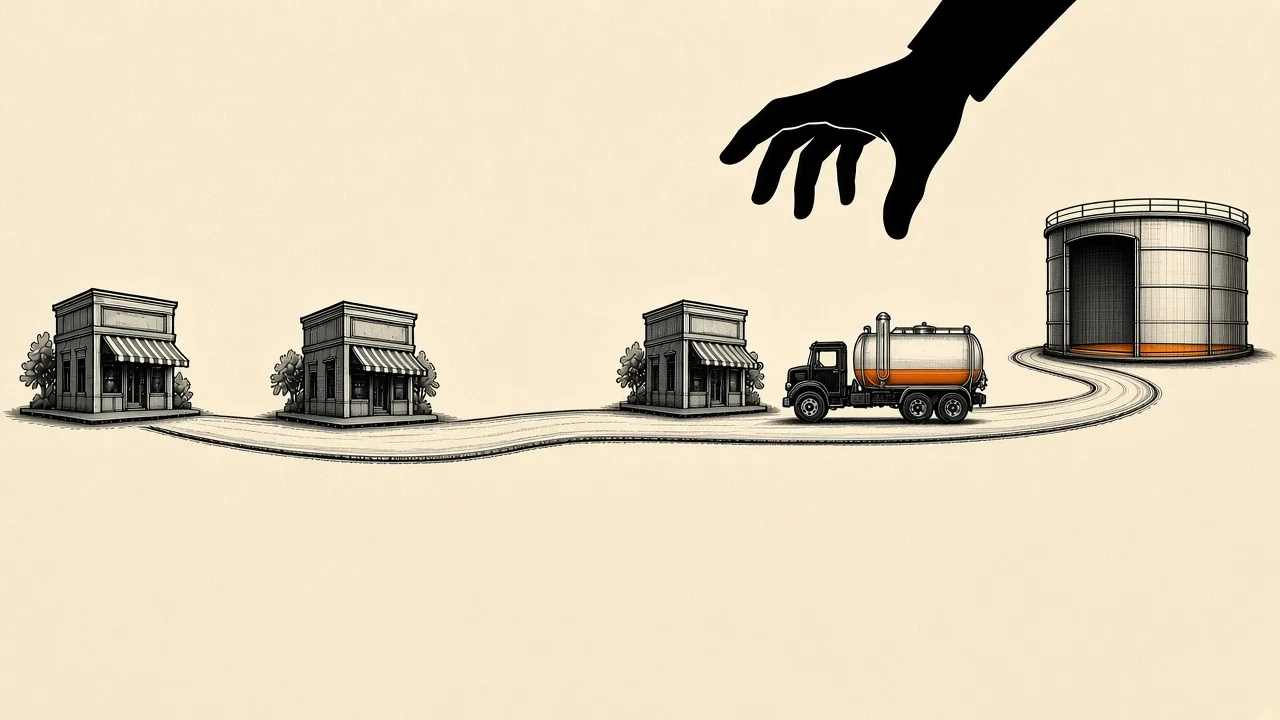
A dry run is a stop at a container that was not ready. The truck's cost per mile barely changes with what it collects, so every gallon you skip collecting raises the cost of the gallons you do collect.
The American Transportation Research Institute's 2026 operational cost report puts the average 2025 cost of running a truck at $2.336 per mile. That is an average across U.S. trucking, not a UCO-specific figure, but it is a fair planning number.
Worked example (illustrative): a 300-gallon container sits 10 miles off the route, so a separate visit adds a 20-mile round trip.
| Container fill at pickup | Gallons collected | Pounds at 7.5 lb per gallon | Trip cost at $2.336 per mile | Cost per gallon |
|---|---|---|---|---|
| 40% | 120 | 900 | about $47 | about $0.39 |
| 80% | 240 | 1,800 | about $47 | about $0.20 |
Fuel is part of that $2.336. With U.S. on-highway diesel at $6.292 a gallon for the week of November 2, 2026, a truck getting 6 miles per gallon burns about 3.3 gallons, or about $21, on those 20 miles. The 7.5 pounds per gallon is a planning number for used cooking oil; weigh your own loads to confirm it.
The point is not the exact cents. It is that collecting the same container at twice the fill halves the cost of every gallon on that trip.
Container Fill Is Half the Answer: How Full Is the Truck?

Container fill tells you where to go. Truck capacity tells you how many of those stops one load can take. A route built only from flagged containers can send a truck to a stop it has no room for.
How much room does the truck really have?
Usable capacity is less than the number on the tank. Start with the rated capacity in gallons. Subtract any residual that stays in the tank after unloading. Hold back a safety buffer, because a stop rarely yields exactly what the estimate said. The planned gallons have to fit inside what is left. Our guide on how to plan routes for trucks that fill up walks through the same math for any fleet.
When should the truck go to unload?
The unload trip should already be in the plan, at the point where the next planned stop would no longer fit. If the receiving site is far from the yard, the trip lands mid-route and the rest of the stops are planned from the receiving site, not from the yard. An unload trip added late, on the fly, is what pushes the last stops into overtime or onto tomorrow.
Illustrative example: a 4,000-gallon truck partway through its route
This is an illustrative example, not a customer result.
| Item | Gallons |
|---|---|
| Rated tank capacity | 4,000 |
| Residual left after unloading | 200 |
| Safety buffer the dispatcher chose | 300 |
| Usable capacity | 3,500 |
| On board after the morning stops | 3,200 |
| Room left | 300 |
Three more containers have crossed the 80% trigger that this dispatcher chose for these accounts. They are expected to yield 240, 180 and 260 gallons. The first fits (3,440 on board). The second would take the truck to 3,620, over the usable limit. So the plan sends the truck to unload after the first stop, then runs the other two from the receiving site, or moves them to another truck with room.
A plan built only on container fill would have sent the truck to all three and found out at the second stop. That is the difference between knowing what is ready and knowing what fits. For how many stops a full shift can hold, see how many stops per day a UCO truck can make.
What Happens When a Container Spikes Mid-Day?
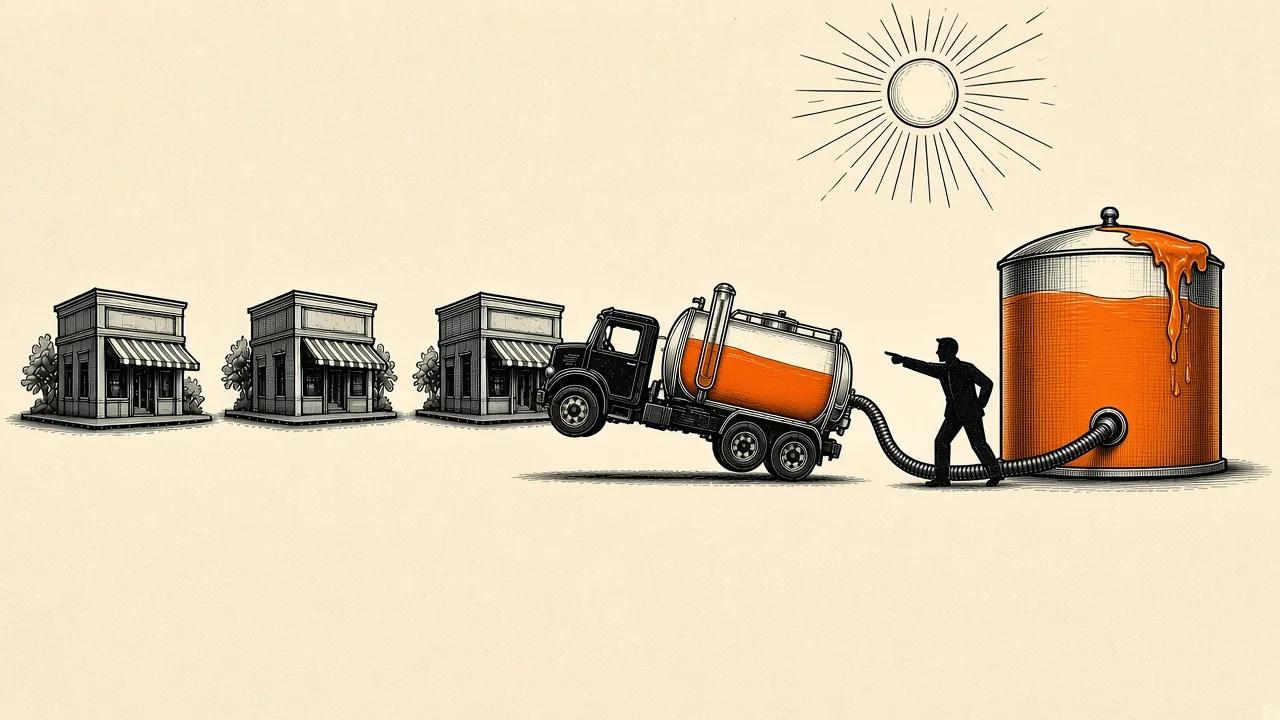
Fill-level data does not arrive on a neat schedule. A reading can cross the threshold at 10 a.m., or a restaurant can call because its container is nearly full. Three questions decide what happens next:
- Can it wait for tomorrow's plan? If the forecast says the container will not overflow before the next planned pass, the cheapest answer is usually to wait.
- Which truck has room and is nearby? The right truck is the one with spare capacity close to the account, not the one with the shortest drive.
- What else moves? Adding a stop to a full day pushes something else. The dispatcher should see what gets bumped before agreeing.
A sudden drop is different. If the level falls between pickups and nobody from your company collected, treat it as possible theft and check the account before the next route. Our guide to dispatching UCO collection trucks covers how dispatchers handle these calls during the day.
Who Does What: Sensor Platforms, Collection Software and Dispatch Software

The tools that touch fill-level routing fall into three groups. Each row uses only what that vendor's own page says, checked November 6, 2026.
| Type | Example | What its page says it does | Price on its page |
|---|---|---|---|
| Sensor platform | FoxInsights (UCOFox) | Daily automated readings, a forecast queue of containers reaching threshold, integration with ERP and planning systems such as SAP. Says moving to level-based planning "does not require replacing your dispatch system." | Not listed |
| Sensor platform | BrighterBins | Ultrasonic oil-level sensors, alerts as tanks approach capacity, REST API and webhooks into an existing logistics system | Not listed |
| Sensor platform | Sensoneo | Radar sensor for liquid levels, alerts on sudden level drops, links to its own route planning software | Not listed |
| Sensor platform | Otodata | Tank monitors on CAT-M and NB-IoT that it says work with all tanks and software; used cooking oil is one of its listed industries | Not listed |
| UCO collection software | Route Simplified | Fill rate tracking to predict when each client's tank will be full, plus records for LCFS and EPA RFS compliance | Local plan $100 a month plus $1 per account, up to 500 accounts; free starter package for under 100 clients |
| Dispatch software | DynoRoute | Takes sensor readings through its API and webhooks or uses pickup history, plans around each truck's capacity and the unload return, and the dispatcher approves changes | Month-to-month, no setup fee, no per-seat fees |
What have vendors reported from fill-level collection?
These are vendor-reported results. Each measures something different, so do not add them together.
- FoxInsights reports a 35% reduction in logistics costs for waste oil collectors, from its 2025 analysis of partner operations in Germany, plus 11% more orders and 7% more volume per tour. It also cites a 45% higher margin per tour from a 2026 UCO field pilot.
- BrighterBins reports that Quatra, a European cooking oil collector with 5,000+ sensored tanks, saw 30% lower operational costs and 25% fewer unnecessary trips.
None of these are U.S. benchmarks, and none come from an independent audit. Treat them as the direction of the effect, then measure your own.
Where DynoRoute Fits
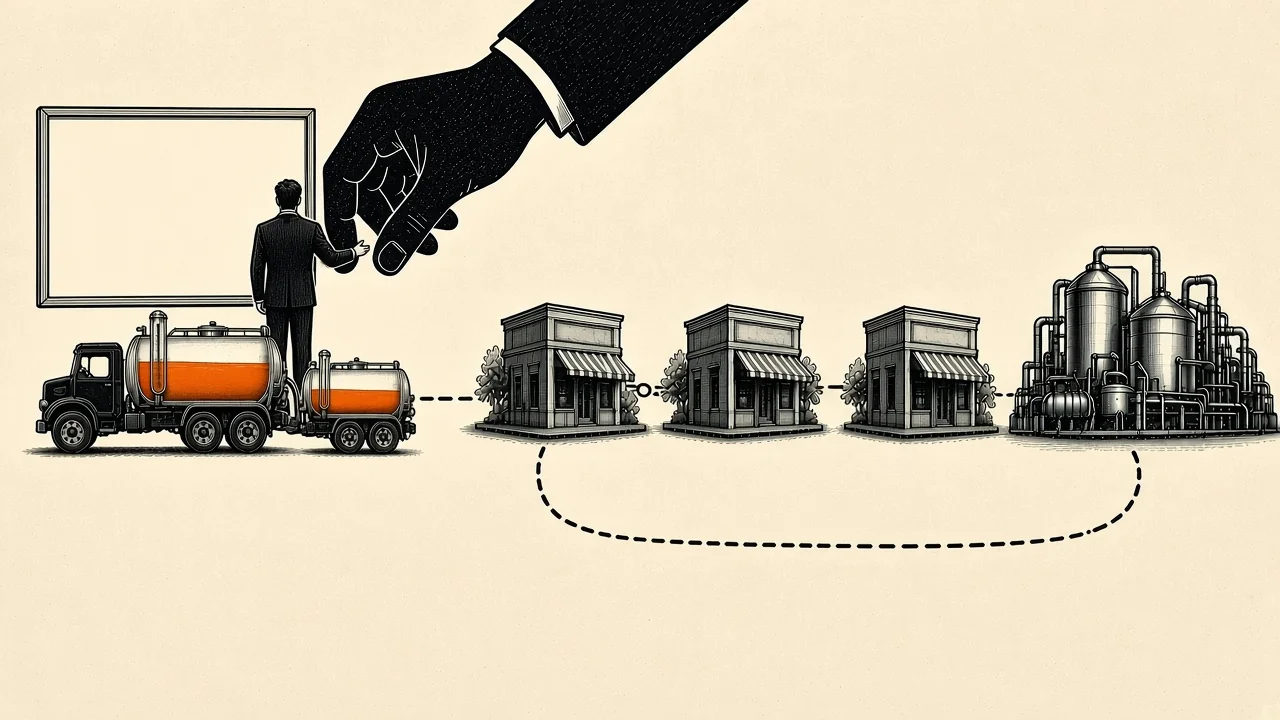
DynoRoute is dispatch software for fleets whose day is limited by what the truck holds. For fill-level routing, its used cooking oil software page says it can:
- Take fill data from either source. Where tanks already carry sensors, it collects the readings into the account through its API and webhooks. Where they don't, it works from pickup history. Sensors are not required.
- Plan around each truck's capacity. Capacity is set per truck in gallons, pounds, or the unit your operation uses. The depot or offload return is part of the route, and work that would push a truck over its planned limit is flagged.
- Re-plan during the day. When actual gallons or an urgent pickup changes the day, it re-plans the remaining work and lets you move urgent pickups without rebuilding the whole day.
- Keep the dispatcher in control. Jobs are matched by capacity, location, availability and workload, with confidence-scored AI suggestions and the reason behind each. The dispatcher approves, changes or rejects them.
- Run recurring cadences as the baseline. Weekly, biweekly, monthly or custom schedules stay in place, and fill data adjusts them.
Plans are month-to-month with no setup fee and no per-seat fees.
What Should You Decide Before Switching to Fill-Level Routing?
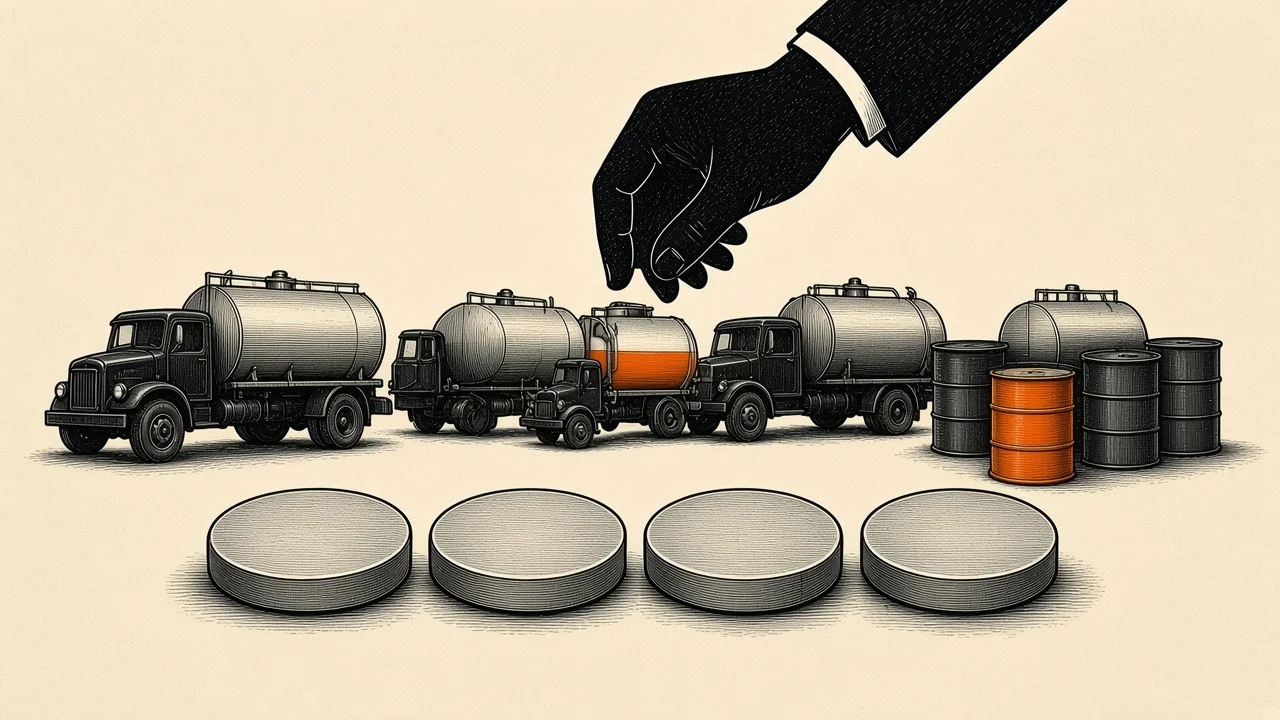
Four questions settle most of the setup:
- Sensors, history or both? List the accounts where an overflow, a theft or a wasted trip costs the most. Those are the sensor candidates.
- What trigger per account? Start with one number, then adjust for fill speed and route density after a few cycles.
- How much can each truck hold, and how far is the unload? Know usable capacity and which accounts sit far from your receiving site.
- Who decides mid-day? Agree who approves an added stop and what gets bumped when the day is full.
Frequently Asked Questions
What is dynamic routing by UCO container fill level?
It is building used cooking oil routes from containers that are ready to collect instead of a fixed calendar. Fill comes from sensors or pickup history, a threshold flags the stop, and the route is fitted to each truck's remaining capacity.
Can route software handle container fill level for UCO pickups?
Yes. Route software can take readings from fill-level sensors, often through an API or webhooks, or estimate fill from each account's pickup history. The better tools then check flagged stops against the truck's remaining capacity and plan the unload trip.
How does sensor triggered UCO pickup routing work?
A sensor reports the oil level, and the container is flagged when it crosses your threshold. The flagged stops are grouped by area, fitted to a truck with room, and sent to the driver after the dispatcher reviews them.
What fill level should trigger a used cooking oil pickup?
There is no regulated level. FoxInsights reports that with level-based planning, collections concentrate at 80 to 90% full, so many collectors start near 80% and adjust per account for fill speed, route density and theft risk.
Do I need sensors for fill-level routing?
No. Pickup history can estimate when each account will be ready, and sensors can be added later on the accounts where a surprise costs the most. Most collectors end up running both.
How much does a dry run to a half-empty container cost?
At ATRI's 2025 average of $2.336 per truck mile, a 20-mile round trip costs about $47. Collecting 120 gallons on that trip costs about $0.39 a gallon, while 240 gallons costs about $0.20.
Can a sensor platform and dispatch software work together?
Yes, because they do different jobs. The sensor platform reports when a container is ready, and the dispatch software decides which truck goes, in what order, and where it unloads, so check that the two connect through an API or webhooks.
Book a 30-Minute Intro Call
If you want to see your own trucks, accounts and fill data planned around capacity, book a 30-minute intro call with DynoRoute. We'll walk through your current routes, where fill readings or pickup history would change them, and where the unload trip should go.